
COVID-19 variants and vaccine options in 2025 – where are we now?
Five years after SARS-CoV-2 emerged, COVID-19 continues to challenge global health with evolving variants. In Australia, the Omicron variant NB.1.8.1 is predominant. Advances in diagnostics, therapeutics and mRNA vaccines have strengthened control efforts, with vaccination remaining key to preventing severe disease, especially in high-risk groups.
- Coronavirus disease 2019 (COVID-19) continues to cause significant morbidity and mortality, particularly in older adults, residents of aged care facilities and people with medical risk factors, including severe immunocompromise.
- Newer variants of severe acute respiratory syndrome coronavirus 2 (SARS-CoV-2), including recombinant Omicron variant NB.1.8.1 – now the predominant strain in Australia – as well as other JN.1 sublineages, do not appear to cause more severe disease than earlier circulating variants.
- The COVID-19 mRNA vaccines available in Australia are safe and effective in protecting against severe illness and death, with generally mild and short-lived side effects. Protection wanes with time since the last dose; therefore, ongoing booster doses are important for those at highest risk.
- A COVID-19 vaccine booster dose is recommended every six to 12 months for adults aged 65 years and older and for all adults with severe immunocompromise.
- When not actively recommended, a COVID-19 vaccine booster dose is still available for some who wish to have it, based on their preference or risk–benefit assessment.
- GPs play a key role in improving vaccine uptake through active recommendation and establishing vaccine confidence.
- COVID-19 vaccines are free for recommended and eligible groups, including those without Medicare.
The WHO declared the end of the coronavirus disease 2019 (COVID-19) pandemic in May 2023. In October 2023, Australia commenced de-escalation of the national COVID-19 emergency response.1 Since then, the causative virus, severe acute respiratory syndrome coronavirus 2 (SARS-CoV-2), has continued to circulate, with new variants shaping transmission and disease burden. In 2025, COVID-19 persists as a significant cause of respiratory illness, particularly affecting older adults, residents of aged care and nursing homes and people with medical risk factors.2 It was responsible for 516 deaths in the first quarter of this year in Australia and remains the leading cause of death due to acute respiratory infections in Australia across 2023 to 2025.3 This article reviews the global COVID-19 landscape in 2025, summarises the performance of updated vaccines and discusses Australia’s epidemiological context and vaccination strategies.
SARS-CoV-2 variants and epidemiology
The Omicron variant of SARS-CoV-2 emerged from South Africa in late 2021, and its descendant lineages continue to dominate transmission patterns.4 NB.1.8.1 is a recent descendant of Omicron, derived from the recombinant variant XDV.1.5.1. It was first recorded on 22 January 2025 and designated a ‘variant under monitoring’ by the WHO.5 NB.1.8.1 is growing rapidly and accounts for 10.7% of globally available sequenced strains. It has been the predominant strain in Australia since May 2025, making up 72% of sequences according to the most recent AusTrakka data.6 Smaller numbers of other variants under monitoring, including XFG, LP.8.1, KP.3.1.1 and XEC continue to be observed in Australia.5 State-based genomic testing in New South Wales and wastewater surveillance in Perth, Western Australia, also indicate a much larger proportion of circulating NB.1.8.1.7,8
Many countries have ceased universal reporting of COVID-19 cases, making the true incidence harder to ascertain. Hospitalisations and deaths remain key indicators monitored by the WHO, and by policy makers.9 COVID-19 surveillance has shifted towards integration with influenza and respiratory syncytial virus monitoring systems, using sentinel site reporting, hospital data and wastewater surveillance.10 Despite under-reporting of mild cases, local data indicate ongoing transmission, with two peaks of COVID-19-associated mortality: one from November to January and the other from May to August.3 This year to date, the number of COVID-19 cases in Australia reached a peak in late June but is overall 31.6% lower than during the same period last year.6 COVID-19 notification rates remain highest among people aged 70 years and over, and second highest among children aged zero to four years.6 Australian sentinel hospital surveillance data from January to August 2025 showed that more adults aged 65 years and over were admitted with COVID-19 than with influenza or respiratory syncytial virus, whereas more children, including those aged under 4 years, were admitted with respiratory syncytial virus or influenza than with COVID-19.
Clinical presentations of the predominant circulating variants, including NB.1.8.1, resemble those observed with earlier Omicron variants.10,11 They typically involve fever and upper respiratory tract symptoms such as rhinorrhoea, cough and sore throat. Newer variants carry mutations that improve immune escape; however, data do not suggest increased severity compared with earlier Omicron variants.9 Older adults and people with severe immunocompromise or other medical risk factors remain at higher risk of severe outcomes, including death, from COVID-19.12,13
COVID-19 vaccines and their effectiveness
With the ongoing evolution of SARS-CoV-2 variants, vaccine manufacturers continue to update COVID-19 vaccines to better match circulating strains. In May 2025, the WHO Technical Advisory Group on COVID-19 Vaccine Composition advised that monovalent JN.1 or KP.2 vaccines remain appropriate vaccine antigens, alongside the updated vaccine antigen LP.8.1.14 Current COVID-19 vaccines available in Australia are the XBB.1.5 and JN.1 mRNA vaccines. XBB.1.5 was the predominant variant from late 2023 to early 2024, and XBB.1.5 vaccines have been available in Australia since 2024. JN.1-adapted vaccines are expected to provide adequate protection against severe disease from the currently predominant NB.1.8.1 variant.10,14 The most recently updated LP.8.1 vaccines have already received regulatory approval in Europe, Canada and the USA; however, they are not yet available in Australia. This reflects the inherent time lag associated with sponsor submission, the local regulatory process and vaccine procurement pathways, which may result in delayed access compared with some other high-income countries.
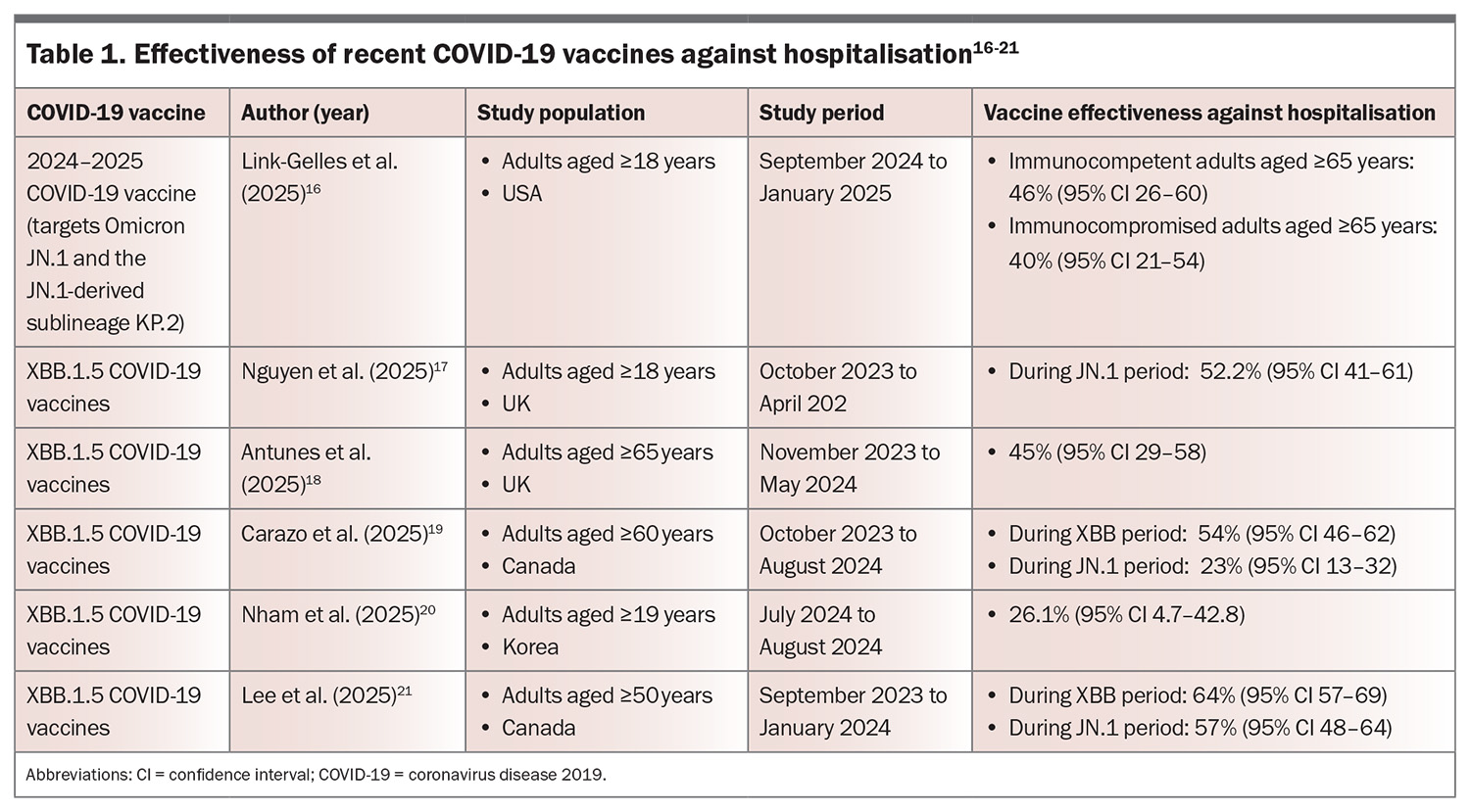
Recent clinical trial data from early 2025 show that mRNA vaccines targeting the JN.1 variant continue to be safe, with infrequent adverse events.15 One month after vaccination, individuals who received the JN.1-adapted vaccine developed higher neutralising antibody levels against JN.1, as well as other circulating variants KP.2 and KP.3, compared with those who received the earlier XBB.1.5-adapted version.15 Although limited efficacy data exist on JN.1-containing vaccines, interim results from the US Centers for Disease Control and Prevention showed that the 2024-2025 COVID-19 vaccines (targeting JN.1 and KP.2 lineages) had estimated vaccine effectiveness against hospitalisation ranging from 40 to 46% among adults aged 65 years and over for up to four months postvaccination, compared with those not receiving the updated vaccine dose. Primary circulating SARS-CoV-2 lineages during the study period were descendants of the Omicron JN.1 lineage, including KP.2, KP.3 and XEC.16
Earlier findings also suggest that vaccines better matched to circulating variants offer improved protection (Table 1).16-21 The effectiveness of XBB.1.5-adapted vaccines against hospitalisation caused by JN.1 lineage viruses has been shown to drop to between 23 and 54%.12,17-19,21,22 Furthermore, hybrid immunity – conferred by a combination of vaccination and prior infection – continues to provide the most durable and broad protection, with protective effectiveness against severe disease estimated at above 90%.23
COVID-19 vaccine recommendations and coverage in Australia
Australia follows an age- and risk-based COVID-19 vaccination strategy, closely aligned with international approaches. After initially offering COVID-19 vaccines universally, the focus has shifted toward protecting those at highest risk of severe disease, such as older adults, people with medical risk conditions and immunocompromised individuals.. This approach mirrors strategies in the USA, the UK and Canada, reflecting a global consensus on prioritising high-risk groups.24-27
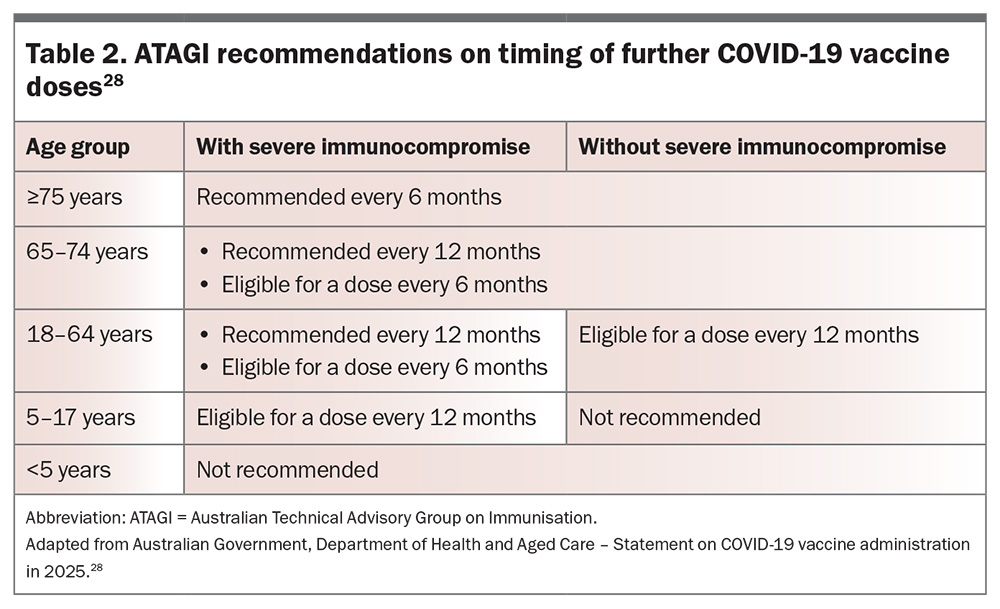
The Australian Technical Advisory Group on Immunisation recommends a COVID-19 vaccine booster every six months for adults aged 75 years and over and every 12 months for adults aged 65 years and over and for all adults with severe immunocompromise (Table 2).28 Healthy adults aged 18 to 64 years are advised to receive a primary COVID-19 vaccine dose and may choose to receive an additional annual booster, based on individual preference and a risk–benefit assessment.
Pregnant women, children and other special groups
Unvaccinated pregnant women are recommended to receive a COVID-19 vaccine at any time during pregnancy. Booster doses are not routinely recommended for healthy, previously vaccinated pregnant women, as their risk of severe maternal or infant outcomes from infection with the Omicron variant is very low.29,30 However, they may choose to receive an additional vaccine dose based on personal preference and circumstances.3
A large observational study from South Africa found infants under 12 months had the highest weekly COVID-19-associated hospitalisation rate among individuals aged 18 years and under during the Omicron wave.32 However, disease severity in all age groups – defined as needing oxygen or respiratory support, intensive care admission, developing acute respiratory distress syndrome or death – was lower during the Omicron period than in previous waves.32 Fever is the most common symptom in hospitalised infants, and the median length of stay is typically short, about one to two days.33,34 Maternal vaccination has been shown to result in the transfer of SARS-CoV-2 antibodies to the fetus, providing passive immunity to newborns.35,36 However, given the overall low severity of COVID-19 in infants, the benefit of an additional vaccine dose during pregnancy appears limited in most cases.
Other adults with higher exposure risk – such as healthcare workers, people in detention settings or international travellers – may also choose to receive a booster dose, even when it is not routinely recommended.
Vaccine uptake and equity
Although vaccines remain available and funded for those most at risk, maintaining equitable uptake continues to be a challenge, particularly among Aboriginal and Torres Strait Islander communities, people living in rural and remote areas and those with disabilities or complex medical needs.37,38 As of mid-2025, the national COVID-19 vaccine coverage remains suboptimal and has declined across all age groups in the past year compared with the preceding 12 months. The steepest decline was observed in adults aged 65 to 74 years, with coverage dropping from 35.4 to 25.6%. Only 32.3% of adults aged 75 years and over received a recommended dose in the past six months, compared with 38.2% in the previous year.38 Coverage among Aboriginal and Torres Strait Islander adults aged 75 years and over is also lower, at 20% in the past six months.6 In contrast, vaccine uptake is higher among aged care residents, with 72% having received a booster dose in the past 12 months.38
GPs play a central role in improving COVID-19 vaccine uptake, particularly among high-risk and underserved populations. Through routine care, practice software audits and trusted patient relationships, GPs can identify eligible individuals, address vaccine hesitancy and provide tailored recommendations. Their ability to deliver clear advice, culturally appropriate communication and flexible access – such as extended clinic hours – supports equitable and timely vaccination. Sustained efforts in primary care are essential for maintaining trust and protecting those most at risk as the virus continues to evolve.
Conclusion
In 2025, COVID-19 remains a dynamic and evolving public health concern. Although the pandemic phase has subsided, the virus continues to undergo mutations, necessitating ongoing refinement of vaccine strategies and public health interventions. Circulating subvariants of Omicron such as NB.1.8.1, KP.3.1.1 and XFG highlight the virus’s adaptability. Timely vaccination remains central to protecting individuals in Australia at highest risk of severe disease, including older adults and those with medical risk factors. Updated vaccines that better align with circulating variants are expected to provide improved protection.
Research and development are advancing towards next-generation COVID-19 vaccines that aim to deliver broader and more durable immunity. These include self-amplifying mRNA platforms and pan-coronavirus vaccines that target conserved viral regions.39,40 Australia is contributing to these innovations, including through clinical trials of microneedle patch delivery systems designed to enhance accessibility and acceptability.
Addressing declining vaccination rates requires tailored communication, culturally safe outreach services and strong local partnerships. GPs play a key role in engaging priority populations, offering trusted advice and facilitating access through routine care and community-based support. Ensuring equitable access and uptake – particularly among priority populations – remains a cornerstone of Australia’s COVID-19 vaccination strategy in 2025. RMT
COMPETING INTERESTS: None.
References
1. Australian Health Protection Principal Committee. AHPPC statement – End of COVID-19 emergency response. Canberra: Australian Government, Department of Health, Disability and Ageing; 2023. Available online at: https://www.health.gov.au/news/ahppc-statement-end-of-covid-19-emergency-response (accessed August 2025).
2. Australian Immunisation Handbook. COVID-19. Canberra: Australian Government, Department of Health and Aged Care; 2025. Available online at: https://immunisationhandbook.health.gov.au/contents/vaccine-preventable-diseases/covid-19#recommendations (accessed August 2025).
3. Australian Bureau of Statistics (ABS). Deaths due to COVID-19, influenza and RSV in Australia - 2023 - March 2025. Sydney: ABS; 2025. Available online at: https://www.abs.gov.au/articles/deaths-due-covid-19-influenza-and-rsv-australia-2023-march-2025 (accessed August 2025).
4. World Health Organization (WHO). Classification of Omicron (B.1.1.529): SARS-CoV-2 variant of concern. Geneva: WHO; 2021. Available online at: https://www.who.int/news/item/26-11-2021-classification-of-omicron-(b.1.1.529)-sars-cov-2-variant-of-concern (accessed August 2025).
5. World Health Organization (WHO). COVID-19 variants of concern, variants of interest, variants under monitoring. Geneva: WHO; 2025. Available online at: https://data.who.int/dashboards/covid19/variants (accessed August 2025).
6. Interim Australian Centre for Disease Control. Australian respiratory surveillance report – 11 August to 24 August 2025. Canberra: Australian Government, Department of Health, Disability and Ageing; 2025. Available online at: https://www.health.gov.au/sites/default/files/2025-09/australian-respiratory-surveillance-report-11-august-to-24-august-2025.pdf (accessed August 2025).
7. Government of Western Australia, Department of Health. COVID-19 wastewater surveillance. Perth: Government of Western Australia, Department of Health; 2025. Available online at: https://www.health.wa.gov.au/articles/a_e/coronavirus/covid19-wastewater-surveillance (accessed August 2025).
8. New South Wales (NSW) Government. NSW respiratory surveillance report – week ending 07 June 2025. Sydney: NSW Government; 2025. Available online at: https://www.health.nsw.gov.au/Infectious/covid-19/Documents/respiratory-surveillance-20250607.pdf (accessed August 2025).
9. World Health Organization (WHO). Types of data requested to inform May 2025 COVID-19 vaccine antigen composition deliberations. Geneva: WHO; 2025. Available online at: https://www.who.int/news/item/25-03-2025-types-of-data-requested-to-inform-may-2025-covid-19-vaccine-antigen-composition-deliberations (accessed August 2025).
10. World Health Organization (WHO) Technical Advisory Group on Virus Evolution (TAG-VE). WHO TAG-VE risk evaluation for SARS-CoV-2 variant under monitoring: NB.1.8.1. Geneva: WHO; 2025. Available online at: https://cdn.who.int/media/docs/default-source/documents/epp/tracking-sars-cov-2/23052025_nb.1.8.1_ire.pdf (accessed August 2025).
11. World Health Organization (WHO) Technical Advisory Group on COVID-19 Vaccine Composition. Updated risk evaluation of JN.1, 15 April 2024. Geneva: WHO; 2024. Available online at: https://www.who.int/docs/default-source/coronaviruse/15042024_jn1_ure.pdf?sfvrsn=8bd19a5c_7 (accessed August 2025).
12. Taylor CA, Patel K, Pham H, et al. COVID-19-associated hospitalizations among U.S. adults aged ≥18 years - COVID-NET, 12 states, October 2023-April 2024. MMWR Morb Mortal Wkly Rep 2024; 73: 869-875.
13. Australian Institute of Health and Welfare (AIHW). Deaths in Australia. Canberra: Australian Government, AIHW; 2025. Available online at: https://www.aihw.gov.au/reports/life-expectancy-deaths/deaths-in-australia/contents/covid-19-deaths (accessed August 2025).
14. World Health Organization (WHO) Technical Advisory Group on COVID-19 Vaccine Composition. Statement on the antigen composition of COVID-19 vaccines. Geneva: WHO; 2025. Available online at: https://www.who.int/news/item/15-05-2025-statement-on-the-antigen-composition-of-covid-19-vaccines (accessed August 2025).
15. Diya O, Gayed J, Lowry FS, et al. A phase 2/3 trial to investigate the safety and immunogenicity of monovalent Omicron JN.1-adapted BNT162b2 COVID-19 vaccine in adults ≥18 years old. Vaccine 2025; 52: 126869.
16. Link-Gelles R, Chickery S, Webber A, et al. Interim estimates of 2024-2025 COVID-19 vaccine effectiveness among adults aged ≥18 years - VISION and IVY networks, September 2024-January 2025. MMWR Morb Mortal Wkly Rep 2025; 74: 73-82.
17. Nguyen JL, Mitratza M, Volkman HR, et al. Effectiveness of the BNT162b2 XBB.1.5-adapted vaccine against COVID-19 hospitalization related to the JN.1 variant in Europe: a test-negative case-control study using the id.DRIVE platform. EClinicalMedicine 2025; 79: 102995.
18. Antunes L, Rojas‐Castro M, Lozano M, et al. Effectiveness of the XBB.1.5 COVID-19 vaccines against SARS-CoV-2 hospitalisation among adults aged ≥65 years during the BA.2.86/JN.1 predominant period, VEBIS hospital study, Europe, November 2023 to May 2024. Influenza Other Respir Viruses 2025; 19: e70081.
19. Carazo S, Skowronski DM, Brousseau N, et al. Monovalent mRNA XBB.1.5 vaccine effectiveness against COVID-19 hospitalization in Quebec, Canada: impact of variant replacement and waning protection during 10-month follow-up. PLoS One 2025; 20: e0325269.
20. Nham E, Song JY, Sohn JW, et al. Real-world effectiveness of COVID-19 XBB.1.5 monovalent mRNA vaccine: analysis over nine months. Vaccine 2025; 59: 127275.
21. Lee N, Nguyen L, Nasreen S, et al. Limited durability of protection conferred by XBB.1.5 vaccines against omicron-associated severe outcomes among community-dwelling adults, Ontario, Canada. Vaccine 2025; 60: 127300.
22. Laniece Delaunay C, Verdasca N, Monge S, et al. COVID-19 vaccine effectiveness against medically attended symptomatic SARS-CoV-2 infection among target groups in Europe, October 2024–January 2025, VEBIS primary care network. Influenza Other Respir Viruses 2025; 19: e70120.
23. Bobrovitz N, Ware H, Ma X, et al. Protective effectiveness of previous SARS-CoV-2 infection and hybrid immunity against the omicron variant and severe disease: a systematic review and meta-regression. Lancet Infect Dis 2023; 23: 556-567.
24. Joint Committee on Vaccination and Immunisation (JCVI). JCVI statement on COVID-19 vaccination in 2025 and spring 2026. Canberra: Australian Government, Department of Health and Social Care; 2024. Available online at: https://www.gov.uk/government/publications/covid-19-vaccination-in-2025-and-spring-2026-jcvi-advice/jcvi-statement-on-covid-19-vaccination-in-2025-and-spring-2026 (accessed August 2025).
25. National Advisory Committee on Immunization. Guidance on the use of COVID-19 vaccines for 2025 to summer 2026. Ottawa: Public Health Agency of Canada; 2025. Available online at: https://www.canada.ca/en/public-health/services/publications/vaccines-immunization/national-advisory-committee-immunization-statement-guidance-covid-19-vaccines-2025-summer-2026.html (accessed August 2025).
26. United States Centers for Disease Control and Prevention (CDC). Staying up to date with COVID-19 vaccines. Atlanta: CDC; 2025. Available online at: https://www.cdc.gov/covid/vaccines/stay-up-to-date.html (accessed August 2025).
27. Schwartz JL. Revised recommendations for Covid-19 vaccines - U.S. vaccination policy under threat. N Engl J Med 2025; 393: 417-419.
28. Australian Technical Advisory Group on Immunisation (ATAGI). ATAGI statement on the administration of COVID-19 vaccines in 2025. Canberra: Australian Government, Department of Health, Disability and Ageing; 2025. Available online at: https://www.health.gov.au/resources/publications/atagi-statement-on-the-administration-of-covid-19-vaccines-in-2025?language=en (accessed August 2025).
29. Örtqvist AK, Magnus MC, Aabakke AJM, et al. Severe COVID-19 during pregnancy in Sweden, Norway, and Denmark. Acta Obstet Gynecol Scand 2023; 102: 681-689.
30. Yamaguchi T, Makino Y, Mabuchi Y, et al. Severity of SARS-CoV-2 infection in pregnant women and their neonates during the Omicron period compared to the pre-Omicron period: a retrospective cohort study. J Obstet Gynaecol Res 2023; 49: 1348-1354.
31. White E, Baik MK, Zahir SF, et al. Management and outcomes of children hospitalised with COVID-19 including incidental and nosocomial infections in Australia 2020-2023: a national surveillance study. J Clin Virol 2025; 179: 105824.
32. Chiwandire N, Jassat W, Groome M, et al. Changing epidemiology of COVID-19 in children and adolescents over four successive epidemic waves in South Africa, 2020-2022. J Pediatric Infect Dis Soc 2023; 12: 128-134.
33. Taylor A, Best EJ, Walls T, et al. COVID-19-related hospitalizations among Aotearoa, New Zealand children during the Omicron era of SARS-CoV-2. IJID regions 2024; 12: 100408.
34. Wilde H, Tomlinson C, Mateen BA, et al. Trends in pediatric hospital admissions caused or contributed by SARS-CoV-2 infection in England. J Pediatr 2025; 276: 114370.
35. Beharier O, Plitman Mayo R, Raz T, et al. Efficient maternal to neonatal transfer of antibodies against SARS-CoV-2 and BNT162b2 mRNA COVID-19 vaccine. J Clin Invest 2021; 131: e150319.
36. Ketabi K, Soleimanjahi H, Habibian A, Abroun S. Pregnancy and SARS-CoV-2 infection with a focus on its vertical transmission, breastfeeding, cord blood banking, and vaccination during COVID-19 infection. J Immunoassay Immunochem 2023; 44: 361-380.
37. Australian Government, Department of Health, Disability and Ageing. COVID-19 outbreaks in Australian residential aged care homes. Canberra: Australian Government, Department of Health, Disability and Ageing; 2025. Available online at: https://www.health.gov.au/sites/default/files/2025-06/covid-19-outbreaks-in-australian-residential-aged-care-homes-20-june-2025.pdf (accessed August 2025).
38. Australian Government, Department of Health, Disability and Ageing. About the national COVID-19 vaccine program. Canberra: Australian Government, Department of Health, Disability and Ageing; 2025. Available online at: https://www.health.gov.au/our-work/covid-19-vaccines/about-rollout (accessed August 2025).
39. Casmil IC, Jin J, Won EJ, et al. The advent of clinical self-amplifying RNA vaccines. Mol Ther 2025; 33: 2565-2582.
40. Wang G, Verma AK, Guan X, et al. Pan-beta-coronavirus subunit vaccine prevents SARS-CoV-2 Omicron, SARS-CoV, and MERS-CoV challenge. J Virol 2024; 98: e0037624.
Single article purchases are temporarily unavailable due to site maintenance.
If you would like to purchase an article during this time, please email us at [email protected] with the article details and we'll assist you directly. We'll also let you know when online purchasing is available again.
Thank you for your patience and understanding.