
The snore you should not ignore – advances in sleep apnoea care
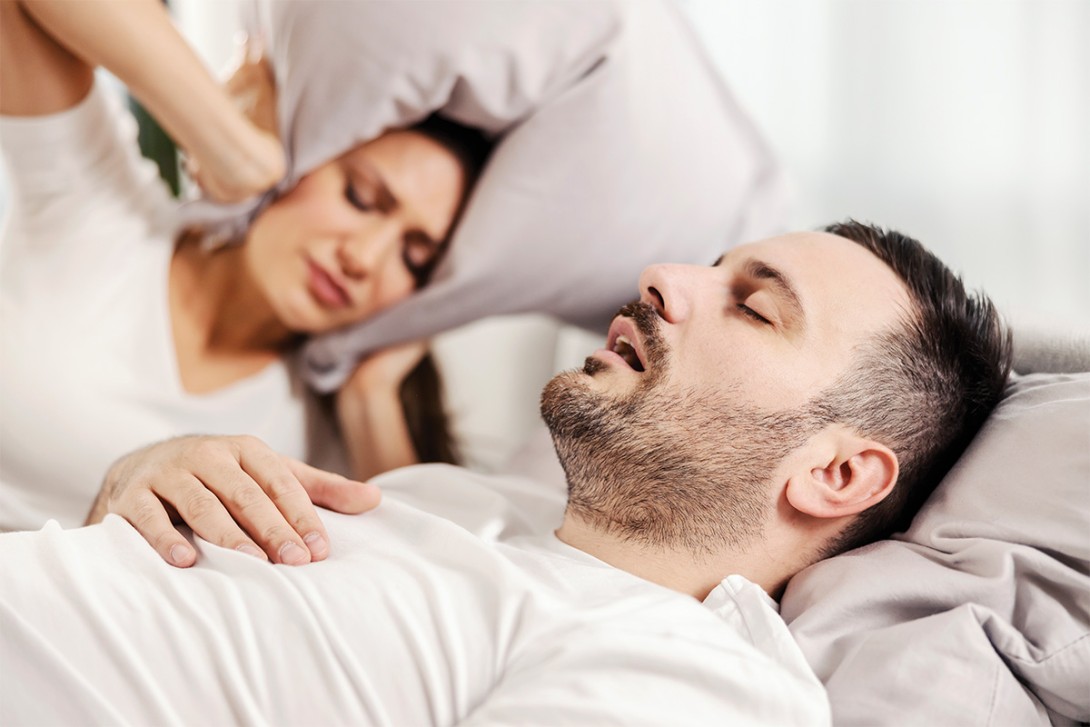
Snoring is often the first sign of obstructive sleep apnoea, a condition closely linked to obesity, hypertension, type 2 diabetes and cardiovascular disease. Management has evolved beyond continuous positive airway pressure to include lifestyle interventions, weight-loss medications, oral appliances and surgery, guided by an understanding of patient phenotypes and endotypes. Consistent treatment relieves symptoms, improves quality of life and reduces long-term cardiovascular risk.
Correction
A correction for this article appears in the April 2026 issue of Respiratory Medicine Today. The online version and the full-text PDF of this article (see link above) have been corrected.
- Patients with witnessed apnoeas, excessive daytime sleepiness, resistant hypertension or specific airway features should be considered at high risk of obstructive sleep apnoea and investigated promptly.
- Home sleep apnoea testing has increased diagnostic accessibility, while in-lab polysomnography remains necessary for complex or atypical presentations.
- Identifying a patient’s obstructive sleep apnoea (OSA) clinical phenotype and physiological endotype can help tailor OSA treatment strategies beyond standard continuous positive airway pressure therapy.
- Proper perioperative assessment, including screening and communication with surgical teams, can reduce the risk of serious complications in patients with OSA undergoing surgery.
Snoring is a common presentation in general practice, but it is far more than a social nuisance. Witnessed apnoeas should alert the clinician that something more serious may be present. Snoring is often the most prominent sign of underlying obstructive sleep apnoea (OSA), a condition closely linked with the chronic diseases GPs manage daily. The concept of ‘Syndrome Z’ – the nexus of sleep apnoea, obesity and metabolic dysfunction – highlights this crucial link and underscores the importance of investigating snoring in the context of hypertension, type 2 diabetes and overall cardiovascular risk. This places GPs, rural generalists and GP anaesthetists in a central role for early identification and risk stratification of patients who snore.
Although the core principles of a thorough history and examination endure, the clinical pathway for OSA has evolved significantly. Diagnostic tools have become more accessible through validated home-based testing, and our understanding of the disease has deepened with the recognition of distinct clinical phenotypes of OSA. The therapeutic toolkit has grown beyond continuous positive airway pressure (CPAP) to include advanced oral appliances, targeted surgery and promising pharmacotherapies. This review provides a practical, evidence-based framework for the modern investigation of the snoring patient, designed to help GPs confidently identify and assess patients with OSA and navigate the management options.
Presentation and initial assessment
For the busy clinician, the challenge lies in efficiently identifying which patients with snoring warrant further investigation. Many patients present because of partner complaints about noise, but a high index of suspicion is required as patients may not recognise the link between their symptoms and a sleep disorder. The clinical presentation of significant OSA generally falls into four categories: the ‘socially disruptive’ snorer; the patient with difficult-to-control cardiovascular comorbidities; the patient with excessive daytime sleepiness; and the patient flagged during a preoperative, dental or ENT assessment.
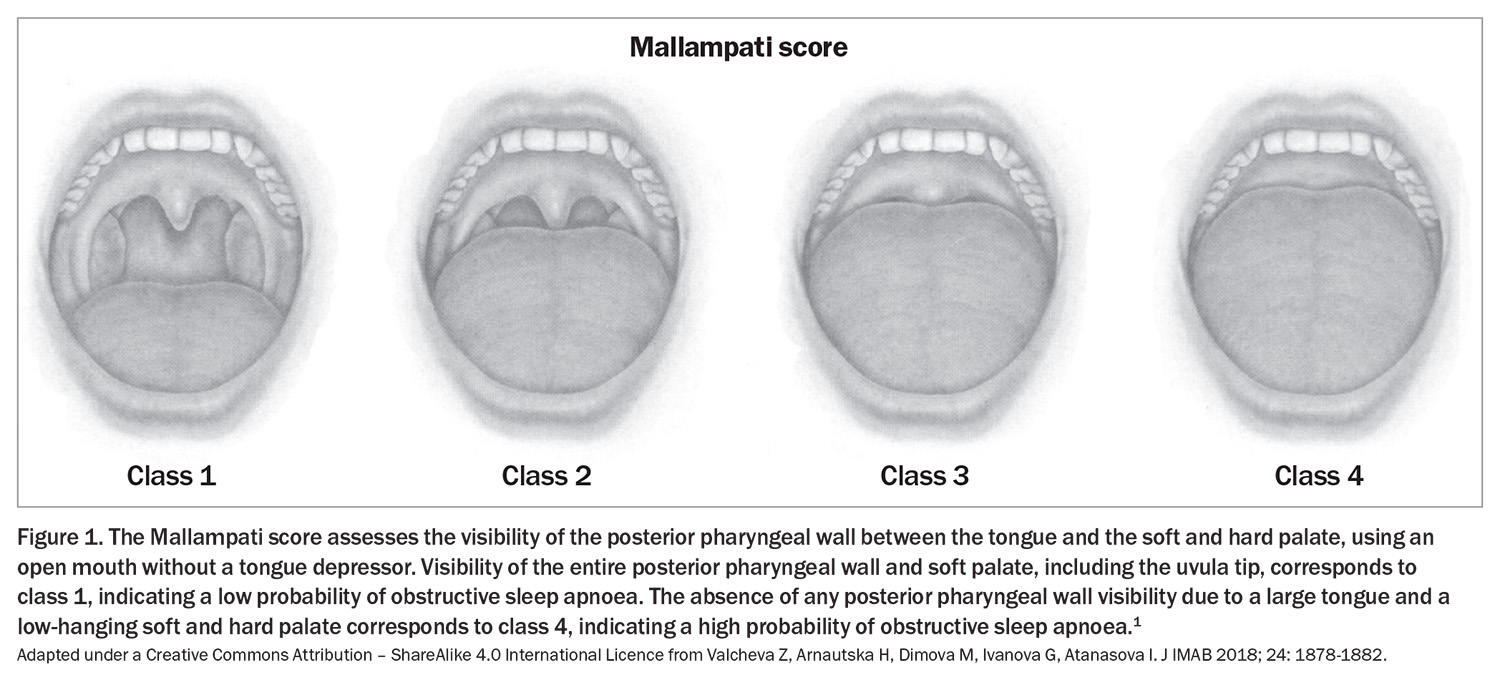
A focused history and examination are the cornerstones of risk stratification. Red-flag symptoms include witnessed apnoeas, nocturnal choking or gasping, and unrefreshing sleep. Excessive daytime sleepiness, particularly in passive situations such as watching the television or being a passenger in a car, is an important symptom affecting both quality of life and public safety. Resistant hypertension (blood pressure not controlled despite treatment with two antihypertensives) should also prompt concern. Examination should include measurement of body mass index, neck circumference (more than 44 cm in men and more than 42 cm in women are risk factors) and systemic blood pressure. A structured airway assessment, noting a high Mallampati score (indicating a more crowded oropharynx and larger tongue base) or enlarged tonsils, can further raise suspicion. The Mallampati scoring system is illustrated in Figure 1.1
Validated screening questionnaires can help formalise the assessment of OSA in a time-efficient way. The STOP-Bang questionnaire is the most practical and effective OSA screening tool for primary care and perioperative settings.2,3 It is a simple, eight-item screen that can be completed in minutes. A score of three or more indicates an increased risk of OSA, whereas a score of five or more suggests a high probability of moderate-to-severe OSA, mandating further investigation.4 The OSA-50 is an alternative metric validated in Australian populations.5 Integrating these tools into routine practice empowers clinicians to triage patients who snore effectively.
Excessive sleepiness is usually assessed with the Epworth Sleepiness Scale, which rates the likelihood of falling asleep in eight scenarios (e.g. being a passenger in a car for an hour or sitting quietly after a lunch) on a scale of zero to three, with three representing a high chance of dozing. An overall score above eight out of 24 is deemed abnormal.
Serum bicarbonate levels above 28 mmol/L (from a standard electrolyte blood test) may indicate hypercapnia, a marker of severe OSA-associated hypoventilation.
Diagnostic pathways
Once OSA is suspected, the clinician’s role is to facilitate an effective diagnostic referral. The availability of home sleep apnoea testing (HSAT) has increased accessibility to diagnostic services for patients.
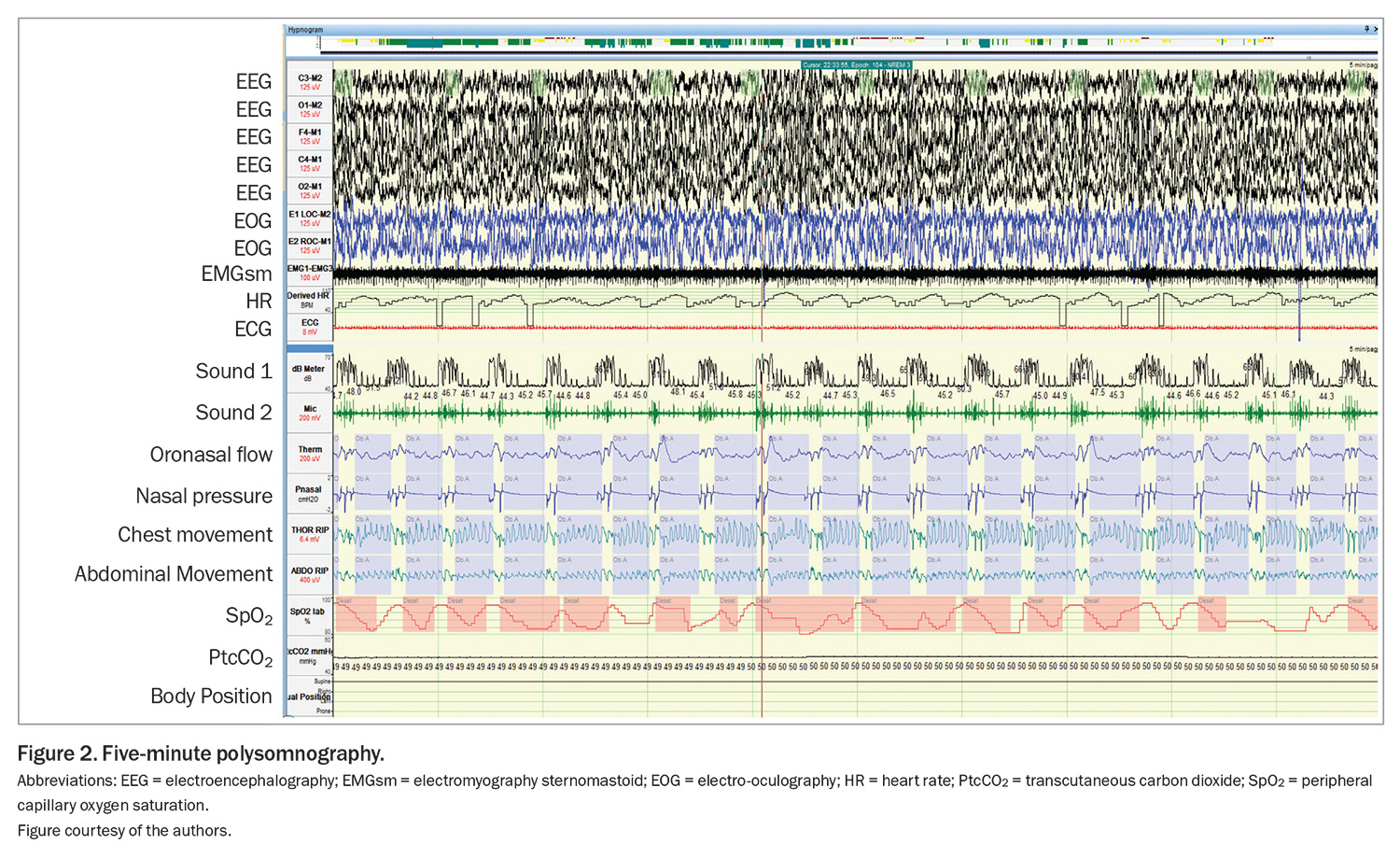
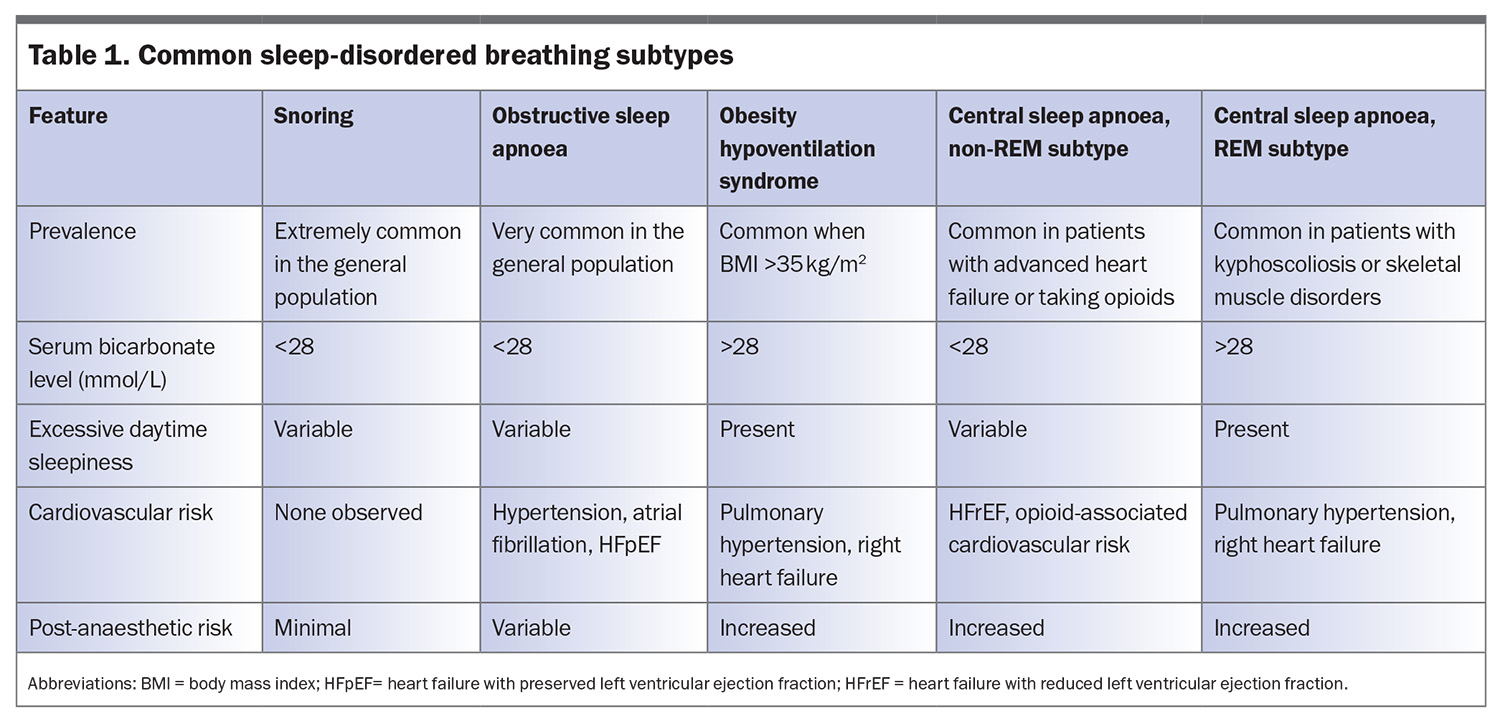
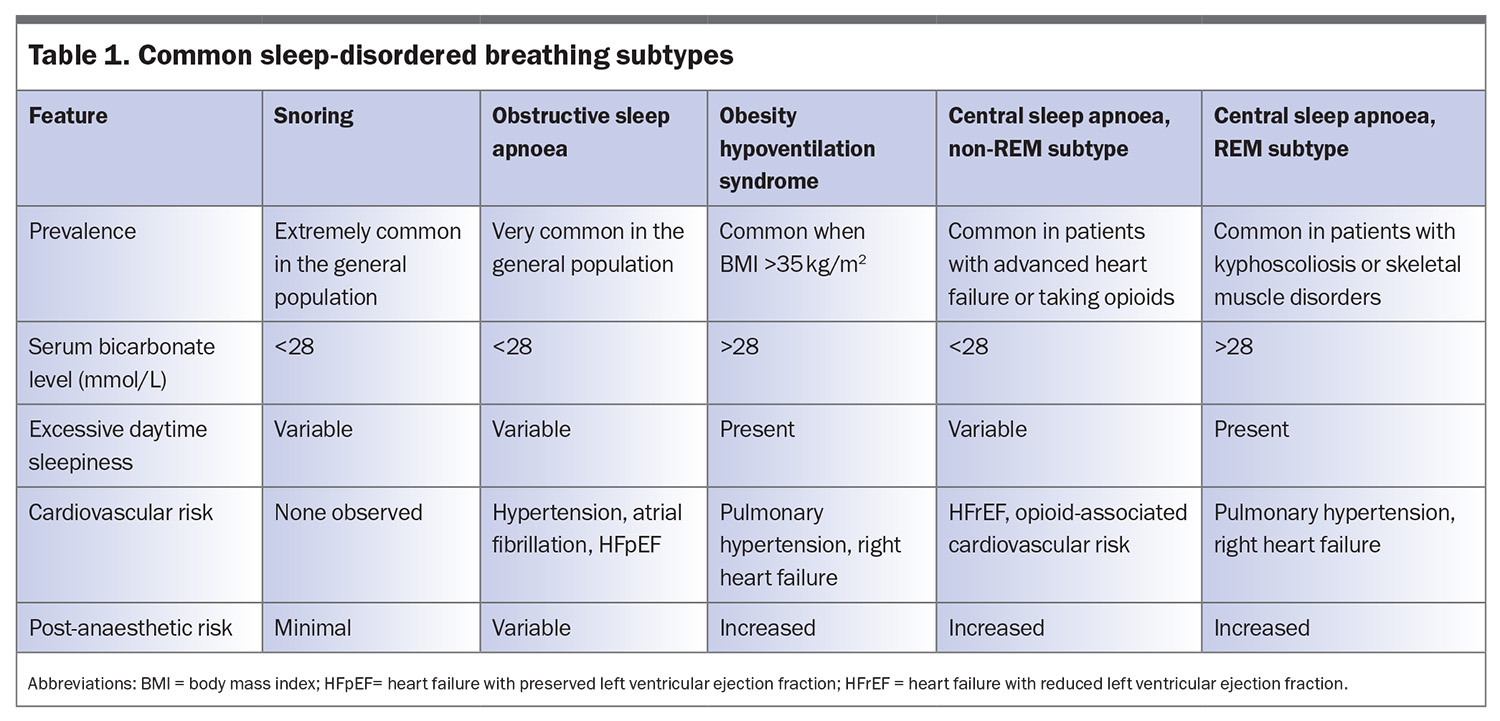
Attended in-laboratory polysomnography (PSG) remains the gold-standard diagnostic test for OSA. This comprehensive, overnight study provides detailed information by monitoring brain activity (with electroencephalography), eye movements (with electro-oculography), muscle tone (with electromyography), heart rhythm (with ECG), airflow, respiratory effort, snoring sounds, oxygen saturation and body position. An example of a PSG result is shown in Figure 2. Referral to a sleep physician for in-laboratory PSG is most appropriate when there is diagnostic uncertainty, such as in the presence of atypical symptoms; when a coexisting sleep disorder is suspected such as narcolepsy, parasomnia or significant periodic limb movement disorder; or in patients with severe cardiorespiratory disease, neuromuscular disorders or chronic opioid use.6 The common forms of sleep-disordered breathing are given in Table 1.
HSAT is preferred to PSG in patients with minimal comorbidities and a high pretest probability of OSA. It typically involves a portable recording device with a nasal cannula, a chest or abdominal belt (or both) and a pulse oximeter. In Australia, electroencephalography, electro-oculography and ECG recordings are required for Medicare funding. Referrals must also include a positive OSA screening tool result and an Epworth Sleepiness Score above eight to meet Medicare requirements. Although HSAT’s convenience and lower cost have improved access to diagnosis, a negative or technically inadequate HSAT does not definitively exclude OSA in patients with high clinical suspicion. In such cases, specialist review, in-laboratory PSG, or both, is required to ensure an accurate diagnosis.
Beyond the apnoea–hypopnoea index
Disease severity
A major conceptual shift in the field of sleep medicine is the recognising that the apnoea–hypopnoea index (AHI) – a simple frequency count of respiratory events – is an incomplete measure of OSA disease severity. Emerging metrics such as hypoxic burden, which quantifies the overall duration and depth of oxygen desaturation, may better predict cardiovascular risk.7 Although hypoxic burden is not yet routinely reported on most sleep reports, GPs can gain a similar understanding of cardiac risk by reviewing oxygen saturation graphs. Elevated serum bicarbonate would indicate hypoventilation, often seen in severe OSA or obesity hypoventilation syndrome.
OSA phenotypes and endotypes
For GPs, a common clinical puzzle is why two patients with the same AHI can have vastly different symptoms and outcomes. This heterogeneity is now better understood through the concepts of phenotypes and endotypes.
A clinical phenotype describes a subgroup of patients with a distinct cluster of features. Rather than a single OSA diagnosis, multiple OSA phenotypes are now recognised, such as ‘disturbed sleep’ (with prominent insomnia symptoms), ‘minimally symptomatic’ and ‘excessively sleepy’ phenotypes.8 This helps explain why some patients primarily experience fatigue and cardiovascular issues, whereas others report insomnia, despite similar AHI scores. Identifying a patient’s likely OSA phenotype can help guide management and tailor counselling to their specific symptom burden.
The OSA endotype refers to the underlying physiological reason for a patient’s airway collapse. Four key traits have been identified: a narrow or collapsible airway anatomy (the most common), poor upper airway muscle responsiveness during sleep, a low arousal threshold (waking too easily) and unstable ventilatory control (high loop gain).9 Although detailed OSA endotyping is currently a research tool, awareness of these mechanisms helps in understanding the rationale behind the expanding treatment landscape. It clarifies why a patient with poor muscle tone might benefit from nerve stimulation, whereas another with a primarily anatomical issue may respond well to an oral appliance, paving the way for a personalised OSA therapy.
Perioperative assessment and management
The perioperative period carries a high risk for patients with unrecognised or undertreated OSA because anaesthesia, sedatives and postoperative opioids suppress respiratory drive and relax upper airway muscles, markedly increasing the risk of airway obstruction, respiratory failure and other serious complications. Data suggest that unrecognised OSA is associated with an increased risk of postoperative adverse events.10,11 GPs play a vital role in patient safety by identifying at-risk individuals before surgery. The postoperative risk of the various types of sleep-disordered breathing are given in Table 1.
Routine preoperative screening for OSA is now considered a standard of care and is recommended by the Centre for Perioperative Care.12 A simple screening tool, such as the STOP-Bang questionnaire or serum bicarbonate level, can help GPs identify at-risk patients and streamline preoperative planning. High-risk scores should be clearly communicated to the surgical and anaesthetic teams, allowing for appropriate planning. This may include favouring regional over general anaesthesia, implementing opioid-sparing multimodal analgesia and ensuring a higher level of postoperative monitoring.
Practical advice for patients is also essential. GPs should advise patients with a known diagnosis of OSA who use CPAP to bring their own device to the hospital with them, and ensure the perioperative team is aware it is used. This simple step allows therapy to be resumed as soon as possible after surgery, reducing the risk of postoperative complications during a vulnerable postoperative period.
The modern therapeutic landscape
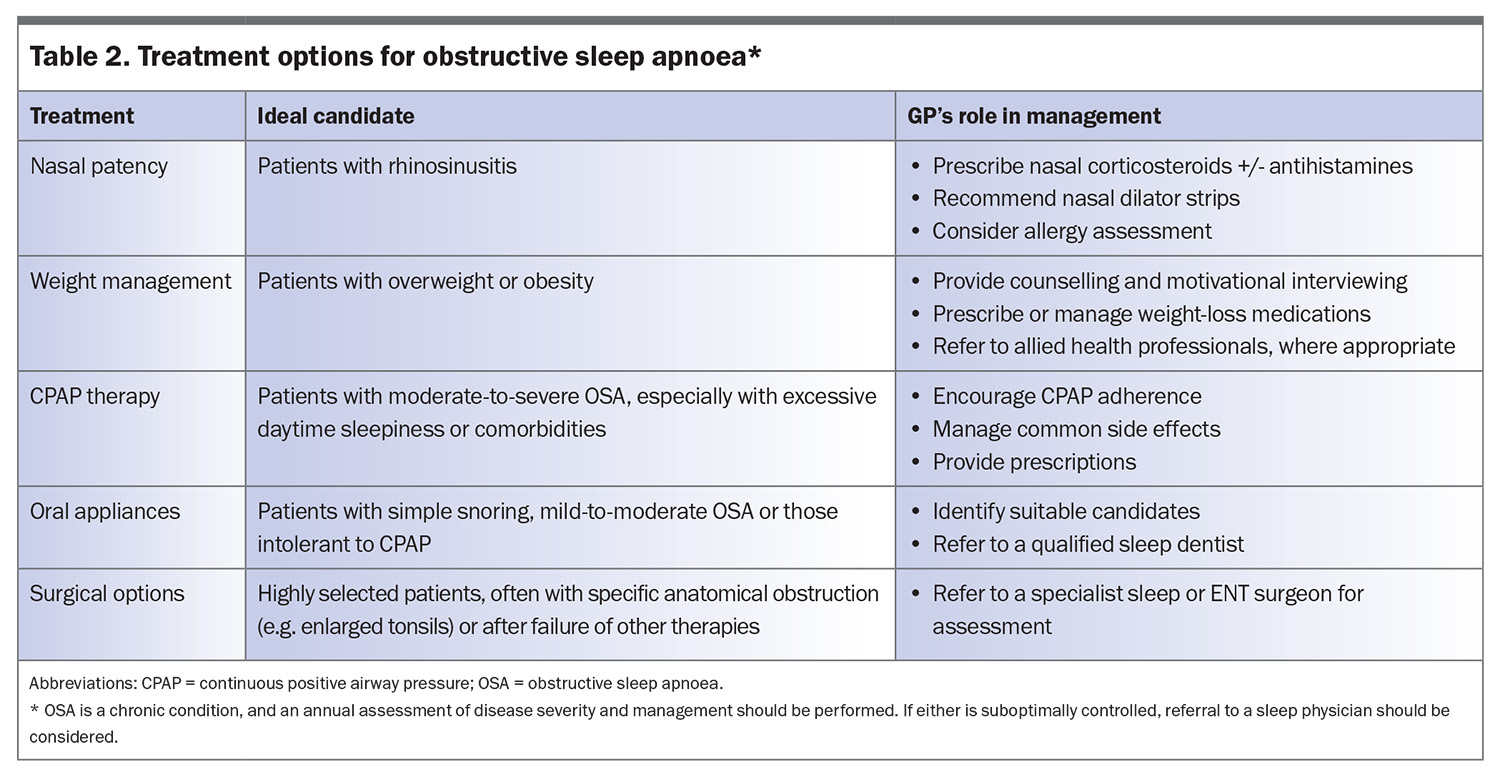
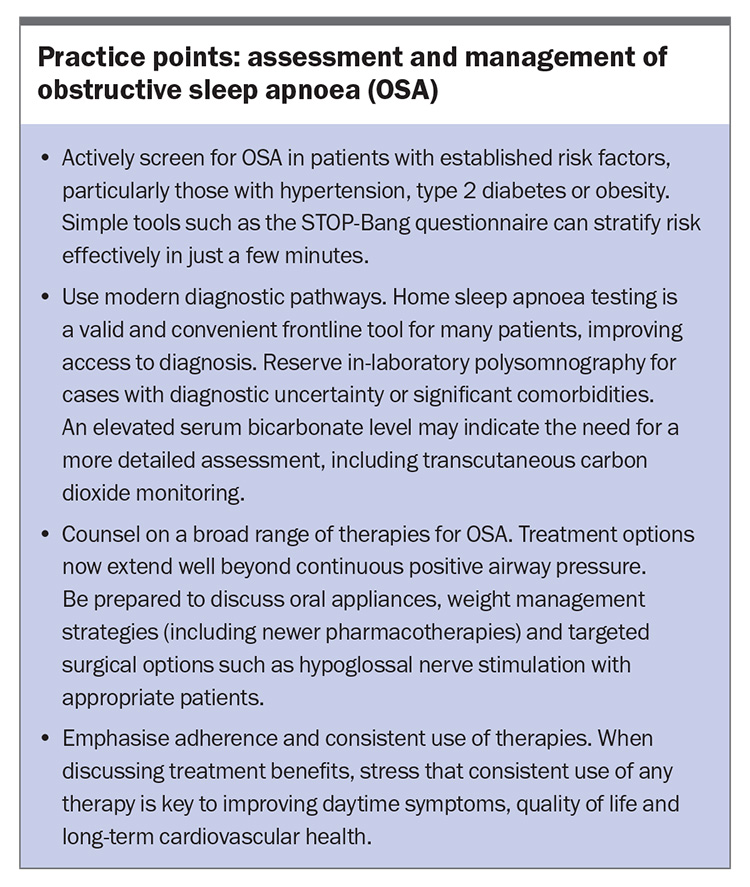
Treatment for OSA is no longer a ‘one-size-fits-all’ approach. Although CPAP remains a cornerstone, the GP’s role now involves counselling patients on a much broader array of effective options, tailored to disease severity, patient preference and underlying OSA phenotype. Treatment options for OSA are summarised in Table 2, and practice points regarding the assessment and management of OSA are listed in the Box.
Conservative measures and lifestyle
For all patients, particularly those with mild OSA, lifestyle interventions are fundamental. Weight management is the most impactful of these; a 10% reduction in body weight can decrease the AHI by more than 25%.13 The emergence of highly effective weight-loss medications, such as glucagon-like peptide-1 receptor agonists, has created a new and powerful therapeutic avenue for managing OSA in patients with obesity.14
Other key advice includes minimising alcohol intake, particularly before sleep, and, for some, positional therapy (avoiding supine sleep and maintaining a slight chin extension), which can be facilitated by simple alarms or specialised pillows. Nasal decongestion with intranasal corticosteroids, antihistamines or dilator strips can improve nasal patency during sleep and reduce snoring in some patients. Many individuals also have comorbid health issues – such as mental illness, chronic low-grade pain or gastro-oesophageal reflux – which are a common cause of insomnia, and should be identified and managed independently of OSA.
Positive airway pressure therapy
CPAP remains the first-line treatment for moderate-to-severe symptomatic OSA. Nasal masks are generally preferred, but for patients with chronic nasal obstruction, full-face masks are used instead. By providing a pneumatic splint to the upper airway, CPAP is highly effective at eliminating apnoeas and improving symptoms such as daytime sleepiness. Modern devices have enhanced patient experience with features such as autotitrating pressure, heated humidification and cloud-based data monitoring, which enables clinicians to track adherence and efficacy remotely. An annual review of CPAP adherence is recommended; if problematic, patients should be re-referred to their CPAP distributor or sleep physician.
The cost of positive airway pressure devices ranges from $1000 to $2000, with a typical lifespan of five to 10 years. Most state- and territory-funded public hospitals in Australia have programs supplying healthcare card holders and financially disadvantaged patients with heavily subsidised positive airway pressure devices. An additional cost is the silicone mask (about $100 to $200), which generally requires replacement every one to two years.
Oral appliances
Mandibular advancement splints, custom-fitted by a qualified dentist, are an important alternative to CPAP. They may be considered a first-line therapy for patients with mild-to-moderate OSA and a second-line option for those with severe OSA who are unable to tolerate or adhere to CPAP.15 These devices work by advancing the mandible forward, thereby opening and stabilising the airway.
Suitable candidates typically have patent nasal passages, good dentition, a lower body mass index, less severe disease and predominantly positional OSA (with apnoeic events more pronounced in the supine than in the lateral position). Annual dental review is recommended to minimise side effects such as tooth movement and jaw discomfort. Costs range from $1000 to $3000, and replacement is usually required every two to three years.
Surgical therapies
Surgery for OSA is generally reserved for carefully selected patients, particularly those with large tonsils or adenoids, chronic nasal obstruction or when other therapies have failed. Traditional soft tissue surgery, such as uvulopalatopharyngoplasty, is now performed less frequently because of variable long-term success rates. More complex procedures, such as maxillomandibular advancement, can be highly effective but are major operations suitable only for specific cases.
Newer device-based therapies, such as hypoglossal nerve stimulation, have shown promise internationally. Hypoglossal nerve stimulation, however, is not widely available in Australia, remaining largely confined to research or highly specialised settings.
Surgical consideration requires referral to a specialist sleep or ENT surgeon for a comprehensive multidisciplinary assessment to identify the site of obstruction and determine whether surgery is appropriate.
CPAP: randomised controlled trials versus real-world data
Counselling patients on the long-term benefits of CPAP treatment for OSA can be challenging, particularly when media headlines highlight conflicting research. Although large observational studies consistently show that patients using CPAP have lower rates of cardiovascular events, major randomised controlled trials have not demonstrated the same protective effect. Understanding this discrepancy is crucial for informed patient discussions.
The most prominent of these studies, the Sleep Apnea cardioVascular Endpoints trial (SAVE), found that in patients with moderate-to-severe OSA and established cardiovascular disease, CPAP use did not prevent secondary cardiovascular events such as heart attack or stroke.16 This finding, although seemingly definitive, must be interpreted in the context of the trial’s limitations. For ethical reasons, patients with severe daytime sleepiness – the group most motivated to use CPAP and potentially most at risk – were excluded from the trial. More importantly, average CPAP adherence in the treatment group was only 3.3 hours per night, a level unlikely to provide cardiovascular benefit.
This is where real-world evidence from large cohort studies becomes valuable.17,18 These studies capture broader patient populations and demonstrate a clear association between effective CPAP use and improved outcomes. Their main limitation is the risk of confounding, particularly the ‘healthy user effect’ – the possibility that patients who adhere to CPAP are also more likely to engage in other healthy behaviours.
For clinicians, the takehome message is not that CPAP is ineffective but that the evidence is nuanced. When discussing its benefits with patients, a practical way to frame it is that, although the definitive randomised controlled trial on preventing heart attacks was inconclusive due to poor adherence, there is strong evidence that consistent CPAP use relieves symptoms, improves quality of life, lowers blood pressure and is closely associated with better long-term cardiovascular outcomes.
Conclusion
The investigation and management of snoring has evolved into a more nuanced and accessible field of medicine. For the busy clinician, the fundamental task of identifying at-risk individuals remains paramount but the tools available now are more powerful and the treatment options more varied than ever before. By moving beyond reliance on the AHI score to adopt a more holistic view – considering a patient’s symptoms, comorbidities and individual risk factors – clinicians can initiate a truly personalised care pathway. The ultimate goal is not only to alleviate snoring but also to reduce the long-term health consequences of untreated OSA, thereby improving both quality of life and patient safety. RMT
COMPETING INTERESTS: Dr Kee has received honoraria from Jazz Pharmaceuticals for a talk on sleep and epilepsy, support from Fisher and Paykel for attending a meeting on high flow oxygen, and a donation from RestMed of equipment for research. He is a Committee Member on the Australian Sleep Association Finance Committee and Australian Sleep Association Membership Committee. Professor Naughton has received payment or honoraria from Somnomed and Novo Nordisk for lectures he has delivered. He has participated in SimplifyOSA and the Reshaped Trial, funded by the National Health and Medical Research Council.
References
1. Yu JL, Rosen I. Utility of the modified Mallampati grade and Friedman tongue position in the assessment of obstructive sleep apnea. J Clin Sleep Med 2020; 16: 303-308
2. Chung F, Yegneswaran B, Liao P, et al. STOP questionnaire: a tool to screen patients for obstructive sleep apnea. Anesthesiology 2008; 108: 812-821.
3. Kee K, Dixon J, Shaw J, et al. Comparison of commonly used questionnaires to identify obstructive sleep apnea in a high-risk population. J Clin Sleep Med 2018; 14: 2057-2064.
4. Chung F, Abdullah HR, Liao P. STOP-Bang questionnaire: a practical approach to screen for obstructive sleep apnea. Chest 2016; 149: 631-638.
5. Chai-Coetzer CL, Antic NA, Rowland LS, et al. A simplified model of screening questionnaire and home monitoring for obstructive sleep apnoea in primary care. Thorax 2011; 66: 213-219.
6. Ellender CM, Ruehland WR, Duce B, et al. Australasian Sleep Association 2024 guidelines for sleep studies in adults. Sleep 2024; 47: zsae107.
7. Azarbarzin A, Sands SA, Stone KL, et al. The hypoxic burden of sleep apnoea predicts cardiovascular disease-related mortality: the Osteoporotic Fractures in Men Study and the Sleep Heart Health Study. Eur Heart J 2019; 40: 1149-1157.
8. Ye L, Pien GW, Ratcliffe SJ, et al. The different clinical faces of obstructive sleep apnoea: a cluster analysis. Eur Respir J 2014; 44: 1600-1607.
9. Edwards BA, Landry SA, Thomson LDJ, Joosten SA. Sleep apnea endotypes and their implications for clinical practise. Sleep Med 2025; 126: 260-266.
10. Chan MTV, Wang CY, Seet E, et al. Association of unrecognized obstructive sleep apnea with postoperative cardiovascular events in patients undergoing major noncardiac surgery. JAMA 2019; 321: 1788-1798.
11. Pivetta B, Sun Y, Nagappa M, Chan M, Englesakis M, Chung F. Postoperative outcomes in surgical patients with obstructive sleep apnoea diagnosed by sleep studies: a meta-analysis and trial sequential analysis. Anaesthesia 2022; 77: 818-828.
12. Centre for Perioperative Care. Perioperative management of obstructive sleep apnoea in adults. London: Centre for Perioperative Care; 2025. Available online at: https://cpoc.org.uk/guidelines-and-resources/guidelines/perioperative-management-osa-adults (accessed August 2025).
13. Peppard PE, Young T, Palta M, Dempsey J, Skatrud J. Longitudinal study of moderate weight change and sleep-disordered breathing. JAMA 2000; 284: 3015-3021.
14. Malhotra A, Grunstein RR, Fietze I, et al. Tirzepatide for the treatment of obstructive sleep apnea and obesity. N Engl J Med 2024; 391: 1193-1205.
15. Sutherland K, Vanderveken OM, Tsuda H, et al. Oral appliance treatment for obstructive sleep apnea: an update. J Clin Sleep Med 2014; 10: 215-27.
16. McEvoy RD, Antic NA, Heeley E, et al. CPAP for prevention of cardiovascular events in obstructive sleep apnea. N Engl J Med 2016; 375: 919-931.
17. Benjafield AV, Pepin JL, Cistulli PA, et al. Positive airway pressure therapy and all-cause and cardiovascular mortality in people with obstructive sleep apnoea: a systematic review and meta-analysis of randomised controlled trials and confounder-adjusted, non-randomised controlled studies. Lancet Respir Med 2025; 13: 403-413.
18. Pépin JL, Bailly S, Rinder P, et al. Relationship between CPAP termination and all-cause mortality: a French nationwide database analysis. Chest 2022; 161: 1657-1665.
Single article purchases are temporarily unavailable due to site maintenance.
If you would like to purchase an article during this time, please email us at [email protected] with the article details and we'll assist you directly. We'll also let you know when online purchasing is available again.
Thank you for your patience and understanding.