
Managing asthma in adults and adolescents: new Australian guidelines

The National Asthma Council Australia updated the Australian Asthma Handbook in September 2025 with new recommendations on airway inflammation testing for the diagnosis of asthma, simplified prescribing recommendations prioritising combination inhaled corticosteroid–formoterol inhalers and a strong recommendation against treatment with short-acting beta-2 agonists alone.
- The diagnosis of asthma in adults and adolescents requires both a history of typical respiratory symptoms and objective evidence of either excessive variability in airflow or airway inflammation. Variable expiratory airflow limitation can be demonstrated by a positive bronchodilator responsiveness test recorded during spirometry. Evidence of airway inflammation can be obtained by measuring exhaled nitric oxide. Bronchial challenge testing may be required if the diagnosis cannot be confirmed.
- All adults and adolescents with asthma need inhaled corticosteroids as part of their treatment to reduce inflammation and prevent exacerbations.
- The use of short-acting beta-2 agonists (e.g. salbutamol) alone is inadequate and encourages risky over-reliance.
- Treatment with an inhaled corticosteroid (ICS)–formoterol combination as the reliever (with or without maintenance ICS–formoterol treatment) is now recommended in place of fixed-dose maintenance treatment with an ICS or ICS– long-acting beta-2 agonist combination with salbutamol or terbutaline as the reliever.
- Long-term use of high doses of ICS-containing treatment is not recommended in primary care.
- A key goal of asthma treatment is to avoid the need for multiple oral corticosteroid courses.
- Monoclonal antibody therapy (via specialist-only prescription) is indicated for severe allergic or eosinophilic asthma. Patients should be offered referral for assessment if asthma cannot be controlled with ICS-containing combinations at a medium dose, after investigating and addressing common causes of poor control (e.g. poor adherence, incorrect inhaler technique, exposure to avoidable triggers).
Around 11% of people in Australia have asthma, causing an estimated 56,600 emergency department visits each year.1 Asthma is a chronic inflammatory lung condition, clinically defined as the combination of episodic respiratory symptoms (wheeze, dyspnoea, cough, constricted feeling in the chest) and fluctuating airway obstruction. For most people with asthma, airway inflammation is driven by a type 2 immune response, with or without allergy.2-6 The presence of type 2 inflammation can be identified by blood eosinophil count and by the fractional exhaled nitric oxide (FeNO) test,7 available in many respiratory function laboratories.
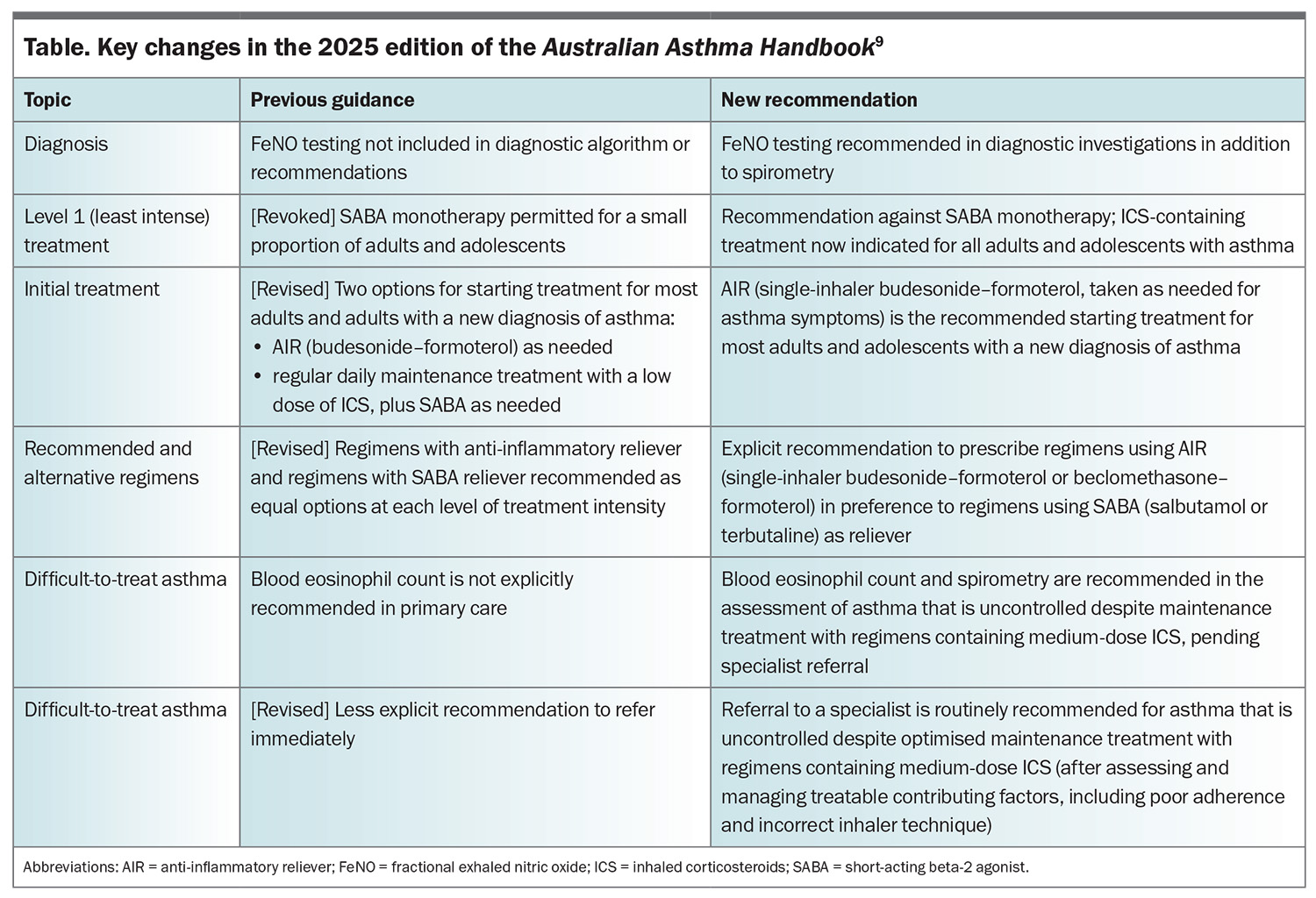
Challenges for clinicians managing asthma include making an accurate diagnosis with limited access to diagnostic tests in primary care,8 and continued over-reliance on short-acting beta-2 agonists (SABAs) among adults and adolescents.1 The National Asthma Council Australia has updated the Australian Asthma Handbook (available online at: https://www.asthmahandbook.org.au)9 after reviewing the evidence and recommendations in international guidelines selected on the basis of quality and recency.10-13 The 2025 guidance on diagnosis and treatment in patients aged 12 years and older includes some major changes that reflect an increasing understanding of inflammation in asthma (Table).9 These new recommendations reinforce the Handbook’s longstanding key principles: use objective tests to confirm the diagnosis and base treatment on inhaled corticosteroid (ICS)-containing treatment to target airway inflammation and prevent exacerbations.9
How to diagnose asthma
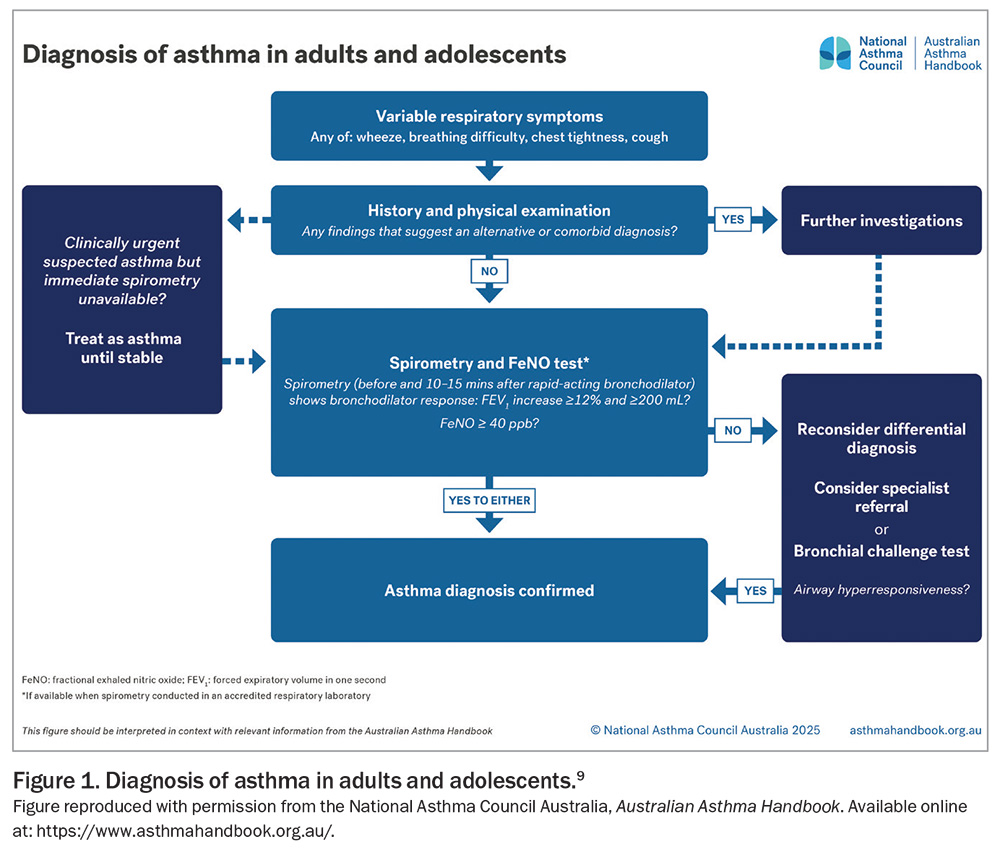
The diagnosis of asthma in adults and adolescents requires a history of variable respiratory symptoms that are unlikely to be explained by another condition, together with objective evidence of variable expiratory airflow limitation, or of airway inflammation. Spirometry and bronchial provocation testing are established tests for excess variability in expiratory airflow. The Australian Asthma Handbook now also advises that direct measurement of airway inflammation with FeNO testing can be used to confirm the diagnosis in patients with symptoms consistent with asthma (Figure 1).9
Typical symptoms must be present but do not prove diagnosis
Asthma symptoms include wheeze, breathlessness, chest tightness and cough. Symptoms may be worse overnight and early in the morning, and may be triggered by airborne allergens and irritants, viral respiratory infections, exercise, air pollution, cold dry air or medications. Although wheezing with dyspnoea is a strong predictor of asthma in adults,14 over-reliance on symptoms alone to diagnose asthma carries the risk of substantial overdiagnosis and underdiagnosis.5 Suspected occupational asthma should be investigated by a respiratory or occupational physician.15
Arrange spirometry to test for variable airflow obstruction
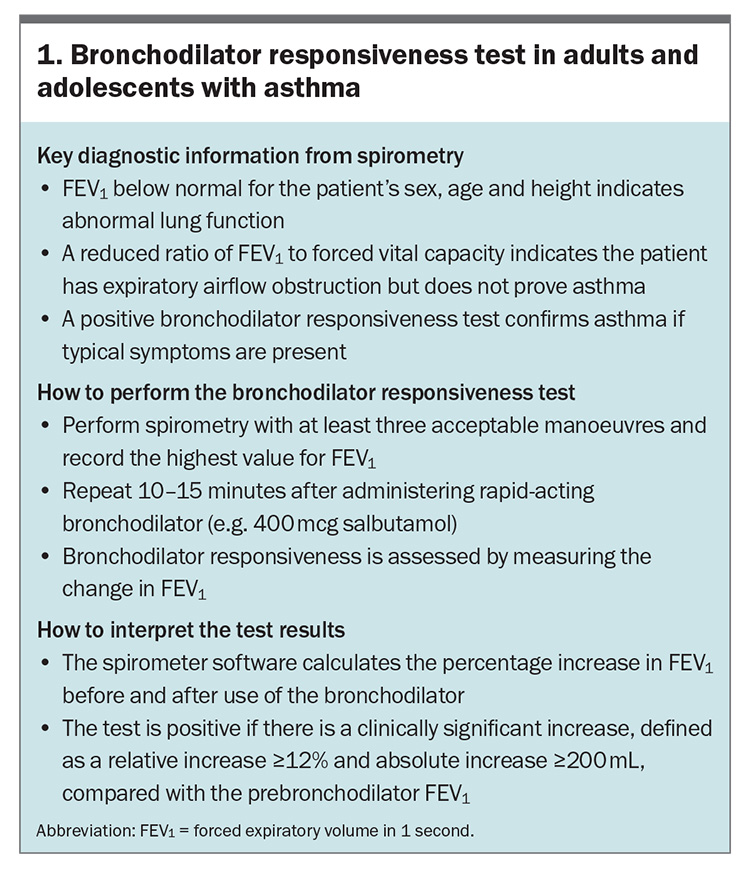
When symptoms and signs suggest asthma, the diagnosis must be confirmed by objective testing. A positive bronchodilator responsiveness test, conducted using spirometry, can help confirm the diagnosis (Box 1). The larger the increase in forced expiratory volume in 1 second after bronchodilator use, the more certain the diagnosis. However, a negative bronchodilator responsiveness test cannot rule out the diagnosis of asthma, especially when no abnormality is detected on pre-bronchodilator spirometry.16
Some primary care practices do not perform their own spirometry because of a lack of training, lack of confidence interpreting the results, cost and concerns about infection control during the COVID-19 pandemic.8,17 If a significant delay to objective testing is unavoidable, treatment should be started if clinically urgent.
Consider investigating airway inflammation with FeNO testing
Recent evidence has shown that, in patients with symptoms consistent with asthma, an elevated FeNO level demonstrates diagnostic reliability similar to that of spirometry with a positive bronchodilator responsiveness test.10,12 Either test finding can therefore be used to confirm a diagnosis of asthma. Spirometry and FeNO testing provide complementary information; thus, combining them increases the chance of confirming the diagnosis without the need for bronchial provocation testing.18
The Australian Asthma Handbook recommends that FeNO testing should be included when spirometry is performed in a respiratory function laboratory, including when initial spirometry in primary care does not confirm asthma.9 In an adult with symptoms and signs strongly suggestive of asthma and unexplained by another condition, and who is not using an ICS, a FeNO level of 40 ppb or greater supports the diagnosis of asthma.10,19 However, FeNO levels are not always raised in asthma and are also influenced by a range of factors including smoking, anti-inflammatory medications (including ICS), allergic rhinitis, acute respiratory infection, adiposity and diet.18,20
Some international guidelines also recommend a blood eosinophil count as a diagnostic test,12 but the National Asthma Council’s Guidelines Committee does not consider it to be reliable enough as a standalone test for asthma.21
Test for airway hyper-reactivity if necessary
If the diagnosis is still uncertain, refer the patient to a specialist (respiratory physician, clinical immunologist or allergist) or arrange a bronchial provocation test for airway hyper-reactivity at a lung function laboratory. Bronchial provocation is the most sensitive test for detecting variable airflow obstruction in asthma and is also useful for ruling out asthma.22,23
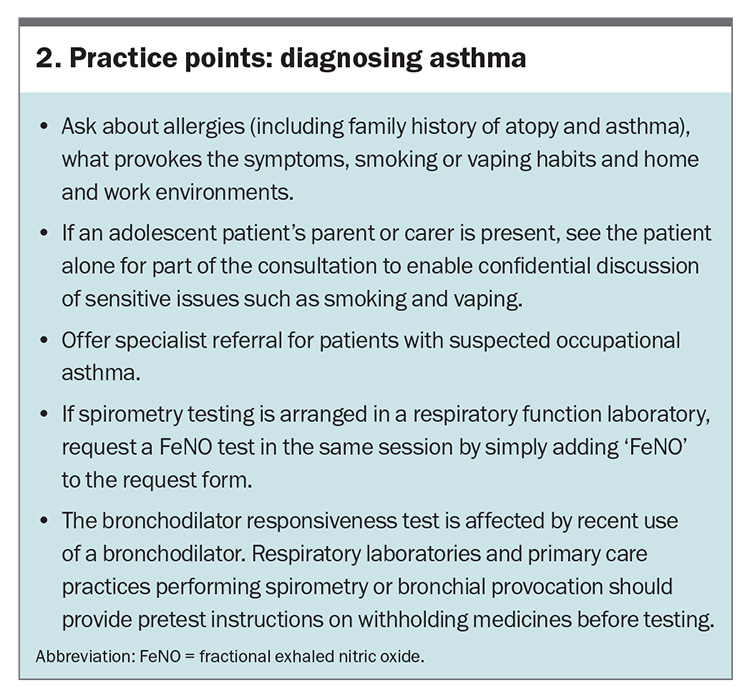
Practice points on asthma diagnosis in primary care are provided in Box 2.
How to prescribe asthma treatment for adults and adolescents
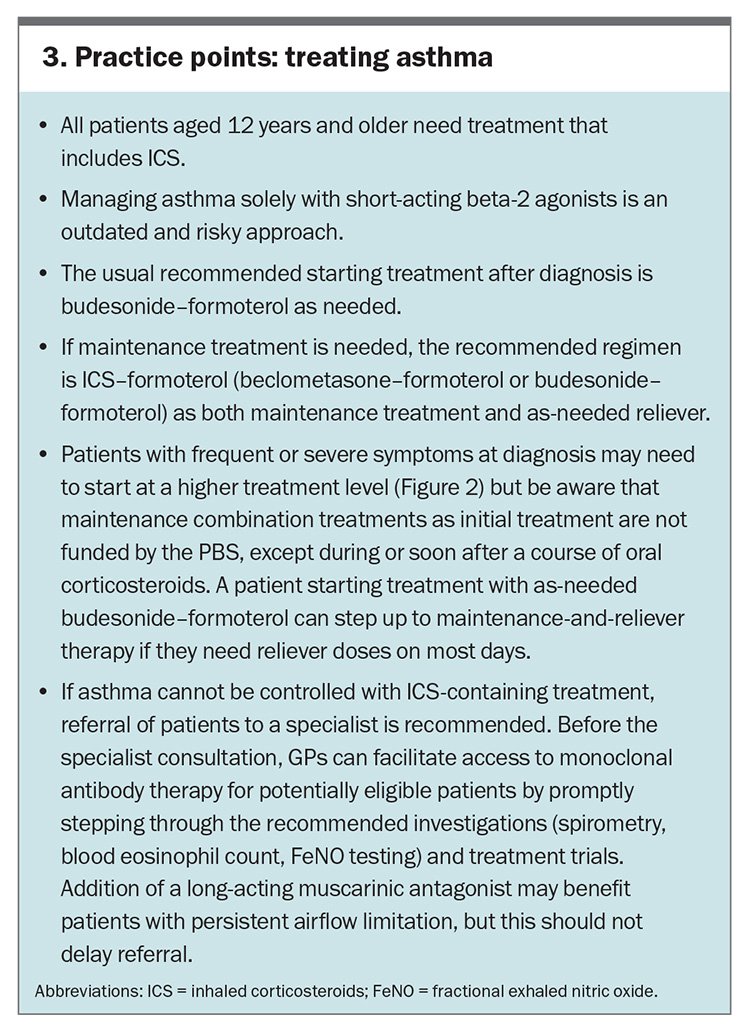
The evidence base for asthma treatment has evolved steadily over recent decades. This has been driven partly by the arrival of new medicines, but also by new ways of using familiar medicines. These advances have led to a profusion of valid treatments, but also to complexity for prescribers. Some practice points for GPs relevant to treatment are provided in Box 3.
Building on recent evidence, the latest edition of the Australian Asthma Handbook moves towards simplicity (Figure 2).9 Many broad principles remain unchanged, including the importance of ICS as the cornerstone of treatment. However, there is now an increased emphasis on combination therapies, and a different approach to relievers in cases of mild asthma. The goal of avoiding exacerbations that require oral corticosteroids is emphasised more strongly, in view of increasing evidence for their long-term harms.24,25

The evolving idea of a ‘reliever’
For many years, the concept of an asthma reliever was synonymous with a SABA. However, in recent decades, research has established that ICS–formoterol inhalers may also be used on an as-needed basis. As these provide a combination of anti-inflammatory action and fast-acting bronchodilation, the term ‘anti-inflammatory reliever’ (AIR) has recently come into favour.26
The first evidence for ICS–formoterol inhalers as relievers was from the use of a single ICS–formoterol inhaler as both regular maintenance and reliever therapy. Such use has been called maintenance-and-reliever therapy (MART). Systematic reviews on this treatment approach have found that, compared with traditional maintenance therapy with a separate SABA reliever, the single-inhaler approach was associated with a reduced need for oral corticosteroid courses, a longer average time between exacerbations and, possibly, reduced hospitalisation.27-29 MART reduces exacerbation rates, compared with the same or higher dose of ICS–long-acting beta-2 agonist (LABA) in a fixed-dose regimen.29 MART using a single inhaler (beclomethasone–formoterol or budesonide–formoterol) also has the virtue of simplicity. It has been available on the PBS for many years for patients with asthma that is not well controlled on a low dose of ICS.
More recent research has evaluated the use of budesonide–formoterol inhalers only as needed, without maintenance treatment, for people with mild asthma. For many doctors who were taught that ICS are medications that should be used regularly, such an as-needed approach may sound like a radical and dubious change. However, there are now several major trials of this AIR approach, and the evidence is solid. The Cochrane review of these trials revealed that as-needed budesonide–formoterol use is as effective for mild asthma as maintenance low-dose ICS with a SABA reliever. It is both safer and more effective than SABA use alone, more than halving the risk of severe exacerbations requiring oral corticosteroids.30 Budesonide–formoterol has been available on the PBS for this AIR-only as-needed use since late 2020.31,32
Farewell to the lone SABA for mild asthma
Historically, guidelines have endorsed the use of SABAs alone, without any ICS, in people with asthma with few symptoms. In the previous edition of the Australian Asthma Handbook, for example, this was limited to patients experiencing symptoms fewer than twice a month and without any risk factors for flare-ups.31 However, major international guidelines have changed: they no longer recommend patients with asthma be prescribed SABAs without an accompanying prescription for an ICS, and they recommend as-needed budesonide–formoterol in place of as-needed SABAs for milder asthma.12,33
In 2025, the Australian Asthma Handbook follows suit. This is because the use of SABAs without an ICS is less safe than relievers used alongside an ICS. We know this from studies comparing AIRs (budesonide–formoterol) with traditional SABA relievers. In these studies, the need for systemic corticosteroid courses was roughly halved, and presentations to hospital or urgent care were also fewer.30 It is also likely that starting patients on SABA therapy alone trains people to think of this as their principal, familiar inhaler.13 Given the inferior safety of SABA therapy alone, such training is best avoided.
Unfortunately, the use of SABA therapy alone is very common. About one-quarter of people in Australia with asthma have the combination of poor asthma control and little or no ICS use.34 Both SABA over-reliance (lack of anti-inflammatory treatment to target the causes of asthma symptoms) and SABA overuse (dose escalation leading to receptor downregulation) should be avoided.35,36 Both of these problems are common among people buying over-the-counter SABAs at Australian pharmacies.37
There is clearly a significant opportunity here for improved asthma control. We hope that as our guidelines shift away from endorsing SABA use without ICS, this treatment gap may narrow. However, this may be challenging, given the availability of nonprescription SABAs in Australia, while ICSs remain available via prescription only.
Combination therapy is preferred at all treatment levels
Another significant change in the 2025 edition of the Australian Asthma Handbook is an explicit preference for combination ICS–formoterol inhalers (Figure 2). There are several reasons for this. In clinical trials, ICS–formoterol inhalers reduced the frequency of exacerbations and the need for oral corticosteroid courses.27,28,38 Additionally, in the real world, poor adherence to maintenance (preventer) therapy is common, as people often value inhalers that bring immediate symptom relief and prefer simpler (rather than complex) treatment regimens.39 Such preferences lead to poor ICS adherence, which exposes people to the dangers of SABA overuse and ICS underuse. Normalising the use of anti-inflammatory inhalers at all treatment levels should reduce adverse asthma outcomes while simplifying treatment. Note that only certain ICS–formoterol inhaler strengths are approved for use as relievers, and combinations of ICS with any LABA other than formoterol cannot be used this way.
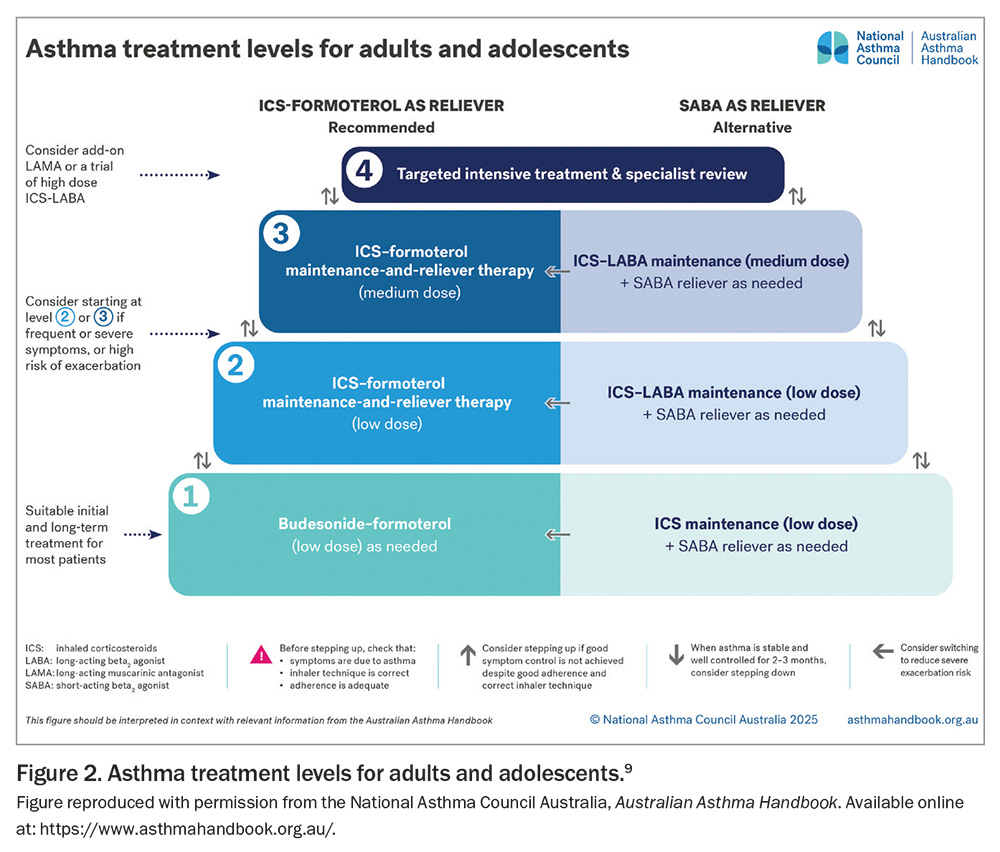
Despite the new recommendation for combination ICS–formoterol therapies, the traditional approach of separate maintenance and SABA therapies is still included as an alternative option. This traditional strategy might be particularly suitable for people who already have good asthma control on such a regimen, are reliably adherent to their maintenance doses and are disinclined to change their inhalers.
Where appropriate, we should consider prescribing dry powder inhalers (rather than pressurised metered-dose inhalers) due to their significantly less adverse environmental impact.40,41 Key clinical trials of combination therapies have used dry powder inhalers.42-45 Regardless of which inhaler device is prescribed, all patients need training to use their inhaler correctly. The technique should be checked at every opportunity.
Do not delay referral for targeted treatment for patients with severe asthma
For patients with severe allergic or eosinophilic asthma that cannot be adequately controlled with ICS-containing treatment, the most effective treatments are often monoclonal antibody therapies targeting components of the inflammatory response.6
Severe asthma refers to asthma that remains uncontrolled despite treatable factors having been addressed and maximal inhaled therapy being taken regularly. Asthma is uncontrolled if the patient experiences frequent symptoms, activity limitations, night waking or exacerbations that require systemic corticosteroid treatment. Among adults with asthma, estimates of the proportion with severe asthma range from 4 to 9.5%.46,47
The 2025 edition of the Australian Asthma Handbook includes updated advice on the sequence of tests and treatment trials that will provide the most efficient pathway for patients with severe asthma to access monoclonal antibody therapy. This involves ruling out common reasons for frequent symptoms or exacerbations despite seemingly adequate treatment (e.g. poor adherence, incorrect inhaler technique, continued exposure to avoidable triggers, comorbid conditions), arranging spirometry and a blood eosinophil count to identify type 2 airway inflammation, clearer indications for referral and what to do while waiting for specialist consultation.9
The Australian Asthma Handbook also provides updated guidance on when to consider prescribing a combination of an ICS, a LABA and a long-acting muscarinic antagonist: for a patient who has developed persistent expiratory airflow limitation over time, or as a treatment trial for a patient with severe asthma awaiting referral.48 This approach should not delay referral for consideration of monoclonal antibody therapies, which have greater benefits in cases of severe asthma.49
Conclusion
The updated Australian Asthma Handbook recommendations on the diagnosis and management of asthma in adults reflect our increasing understanding of the central role of chronic airway inflammation in asthma. Spirometry is still recommended in the diagnostic workup of asthma, but FeNO testing is similarly reliable in patients with typical asthma symptoms. Performing both tests will improve diagnostic accuracy. The revised guidance on medications will help GPs reduce asthma symptoms and emergency room visits. Key updates include the new message that ICS-containing treatment is indicated for all adults and adolescents with asthma, strengthened recommendations for AIR therapy as the best option for managing symptoms and updated guidance on streamlining access to targeted monoclonal antibody therapy for patients with severe asthma. RMT
COMPETING INTERESTS: Dr Montgomery is a member of the Guidelines Committee at the National Asthma Council Australia. Professor Wark: None. Professor Zwar is Chair of the Guidelines Committee at the National Asthma Council Australia. Associate Professor Rigby is Clinical Executive Lead at the National Asthma Council Australia; has received honoraria for presentations and advisory boards from AstraZeneca, GSK, Boehringer Ingelheim and Trudell; has received honoraria for webinars from HealthEd, ThinkGP and Praxhub; and has received support from AstraZeneca to attend a Thoracic Society of Australia & New Zealand conference.
ACKNOWLEDGEMENTS: The authors were supported with editorial assistance from Ms Jenni Harman, Medical Writer, Meducation, funded by the National Asthma Council Australia.
References
1. Australian Institute of Health and Welfare (AIHW). Chronic respiratory conditions: asthma. Canberra: Australian Government, AIHW; 2024. Available online at: https://www.aihw.gov.au/reports/chronic-respiratory-conditions/asthma (accessed September 2025).
2. Fahy JV. Type 2 inflammation in asthma – present in most, absent in many. Nat Rev Immunol 2015; 15: 57-65.
3. Lambrecht BN, Hammad H. The immunology of asthma. Nat Immunol 2015; 16: 45-56.
4. Kothalawala DM, Kadalayil L, Weiss VBN, et al. Prediction models for childhood asthma: a systematic review. Pediatr Allergy Immunol 2020; 31: 616-627.
5. Aaron SD, Boulet LP, Reddel HK, Gershon AS. Underdiagnosis and overdiagnosis of asthma. Am J Respir Crit Care Med 2018; 198: 1012-1020.
6. Brusselle GG, Koppelman GH. Biologic therapies for severe asthma. N Engl J Med 2022; 386: 157-171.
7. Gandhi NA, Bennett BL, Graham NM, Pirozzi G, Stahl N, Yancopoulos GD. Targeting key proximal drivers of type 2 inflammation in disease. Nat Rev Drug Discov 2016; 15: 35-50.
8. Lim R, Smith T, Usherwood T. Barriers to spirometry in Australian general practice: a systematic review. Aust J Gen Pract 2023; 52: 585-593.
9. National Asthma Council Australia. Australian Asthma Handbook. The National Guidelines for Health Professionals. Melbourne: National Asthma Council Australia. Available online at: https://www.asthmahandbook.org.au/ (accessed September 2025).
10. Louis R, Satia I, Ojanguren I, et al. European Respiratory Society guidelines for the diagnosis of asthma in adults. Eur Respir J 2022; 60(3): 2101585.
11. Expert Panel Working Group of the National Heart Lung and Blood Institute administered and coordinated National Asthma Education and Prevention Program Coordinating Committee (NAEPPCC); Cloutier MM, Baptist AP, Blake KV, et al. 2020 Focused updates to the asthma management guidelines: a report from the National Asthma Education and Prevention Program Coordinating Committee Expert Panel Working Group. J Allergy Clin Immunol 2020; 146: 1217-1265.
12. British Thoracic Society, National Institute for Health and Care Excellence, Scottish Intercollegiate Network. Asthma: diagnosis, monitoring and chronic asthma management (BTS, NICE, SIGN). NICE guideline [NG245]. London, UK: National Institute for Health and Care Excellence [UK]; 2024. Available online at: https://www.nice.org.uk/guidance/ng245 (accessed September 2025).
13. Global Initiative for Asthma (GINA). Global Strategy for Asthma Management and Prevention. Fontana, WI, USA: GINA; 2025. Available online at: https://www.ginasthma.org/reports (accessed September 2025).
14. Sistek D, Wickens K, Amstrong R, D’Souza W, Town I, Crane J. Predictive value of respiratory symptoms and bronchial hyperresponsiveness to diagnose asthma in New Zealand. Respir Med 2006; 100: 2107-2111.
15. Hoy R, Burdon J, Chen L, et al. Thoracic Society of Australia and New Zealand and National Asthma Council work-related asthma position paper. Respirology 2020; 25: 1183-1192.
16. Tan DJ, Lodge CJ, Lowe AJ, et al. Bronchodilator reversibility as a diagnostic test for adult asthma: findings from the population-based Tasmanian Longitudinal Health Study. ERJ Open Res 2021; 7: 00042-02020.
17. Hancock K, Parsons D, Schembri D. Conducting spirometry in general practice. Infection control during the COVID-19 pandemic. Respiratory Medicine Today 2020; 5(2): 28-33.
18. Murugesan N, Saxena D, Dileep A, Adrish M, Hanania NA. Update on the role of FeNO in asthma management. Diagnostics (Basel) 2023; 13: 1428.
19. British Thoracic Society, National Institute for Health and Care Excellence, Scottish Intercollegiate Network. Asthma: diagnosis, monitoring and chronic asthma management (update). [F] Evidence reviews for diagnostic accuracy of fractional exhaled nitric oxide (FeNO) measures BTS/NICE/SIGN collaborative guideline NG245 [November 2024]. London, UK: National Institute of Health and Care Excellence; 2024. Available online at: https://www.nice.org.uk/guidance/ng245/evidence (accessed September 2025).
20. Loewenthal L, Menzies-Gow A. FeNO in asthma. Semin Respir Crit Care Med 2022; 43: 635-645.
21. Benson VS, Hartl S, Barnes N, Galwey N, Van Dyke MK, Kwon N. Blood eosinophil counts in the general population and airways disease: a comprehensive review and meta-analysis. Eur Respir J 2022; 59: 2004590.
22. White E, Hall G, Hollams E, DeKlerk N, Hantos Z, Holt P. Specificity and sensitivity of mannitol challenge testing for asthma in young adults from the Western Australian Pregnancy (Raine study) Cohort. Eur Respir J 2013; 42(Suppl 57): P1283.
23. Cockcroft D, Davis B. Direct and indirect challenges in the clinical assessment of asthma. Ann Allergy Asthma Immunol 2009; 103: 363-369.
24. Price D, Castro M, Bourdin A, Fucile S, Altman P. Short-course systemic corticosteroids in asthma: striking the balance between efficacy and safety. Eur Respir Rev 2020; 29: 190151.
25. Blakey J, Chung LP, McDonald VM, et al. Oral corticosteroids stewardship for asthma in adults and adolescents: a position paper from the Thoracic Society of Australia and New Zealand. Respirology 2021; 26: 1112-1130.
26. Levy ML, Crooks MG. Anti-inflammatory reliever therapy (AIR) for asthma. ERJ Open Res 2024; 10: 00494-02024.
27. Cates CJ, Karner C. Combination formoterol and budesonide as maintenance and reliever therapy versus current best practice (including inhaled steroid maintenance), for chronic asthma in adults and children. Cochrane Database Syst Rev 2013; 4: CD007313.
28. Beasley R, Harrison T, Peterson S, et al. Evaluation of budesonide-formoterol for maintenance and reliever therapy among patients with poorly controlled asthma: a systematic review and meta-analysis. JAMA Netw Open 2022; 5: e220615.
29. Sobieraj DM, Weeda ER, Nguyen E, et al. Association of inhaled corticosteroids and long-acting β-agonists as controller and quick relief therapy with exacerbations and symptom control in persistent asthma: a systematic review and meta-analysis. JAMA 2018; 319: 1485-1496.
30. Crossingham I, Turner S, Ramakrishnan S, et al. Combination fixed-dose beta agonist and steroid inhaler as required for adults or children with mild asthma. Cochrane Database Syst Rev 2021; 5: CD013518.
31. Reddel HK. Updated Australian guidelines for mild asthma: what’s changed and why? Aust Prescr 2020; 43: 220-224.
32. Mild asthma: practical considerations and a new treatment option. Sydney: MedicineWise News [serial on the Internet]; 2020: Available online at: https://www.nps.org.au/news/mild-asthma-practical-considerations-and-a-new-treatment-option (accessed September 2025).
33. Reddel HK, FitzGerald JM, Bateman ED, et al. GINA 2019: a fundamental change in asthma management: Treatment of asthma with short-acting bronchodilators alone is no longer recommended for adults and adolescents. Eur Respir J 2019; 53: 1901046.
34. Reddel HK, Sawyer SM, Everett PW, Flood PV, Peters MJ. Asthma control in Australia: a cross-sectional web-based survey in a nationally representative population. Med J Aust 2015; 202: 492-497.
35. Hancox RJ. Concluding remarks: can we explain the association of beta-agonists with asthma mortality? A hypothesis. Clin Rev Allergy Immunol 2006; 31: 279-288.
36. Hancox RJ, Cowan JO, Flannery EM, Herbison GP, McLachlan CR, Taylor DR. Bronchodilator tolerance and rebound bronchoconstriction during regular inhaled beta-agonist treatment. Respir Med 2000; 94: 767-771.
37. Azzi EA, Kritikos V, Peters MJ, et al. Understanding reliever overuse in patients purchasing over-the-counter short-acting beta(2) agonists: an Australian community pharmacy-based survey. BMJ Open 2019; 9: e028995.
38. Kew KM, Karner C, Mindus SM, Ferrara G. Combination formoterol and budesonide as maintenance and reliever therapy versus combination inhaler maintenance for chronic asthma in adults and children. Cochrane Database Syst Rev 2013; 12: CD009019.
39. Foster J, Beasley R, Braithwaite I, et al. Perspectives of mild asthma patients on maintenance versus as-needed preventer treatment regimens: a qualitative study. BMJ Open 2022; 12: e048537.
40. National Asthma Council Australia. Reducing the environmental impact of asthma treatment. Melbourne: National Asthma Council Australia; 2024. Available online at: https://www.nationalasthma.org.au/living-with-asthma/resources/health-professionals/information-paper/reducing-the-environmental-impact-of-asthma-treatment (accessed September 2025).
41. Wurzel DF, Montgomery BD, Anderson N, et al. Environmental impact of inhaled medicines: a Thoracic Society of Australia and New Zealand position statement. Respirology 2025; 30: 101-112.
42. Bateman ED, Reddel HK, O’Byrne PM, et al. As-needed budesonide-formoterol versus maintenance budesonide in mild asthma. N Engl J Med 2018; 378: 1877-1887.
43. O’Byrne PM, FitzGerald JM, Bateman ED, et al. Inhaled combined budesonide–formoterol as needed in mild asthma. N Engl J Med 2018; 378: 1865-1876.
44. Beasley R, Holliday M, Reddel HK, et al. Controlled trial of budesonide-formoterol as needed for mild asthma. N Engl J Med 2019; 380: 2020-2030.
45. Hardy J, Baggott C, Fingleton J, et al. Budesonide-formoterol reliever therapy versus maintenance budesonide plus terbutaline reliever therapy in adults with mild to moderate asthma (PRACTICAL): a 52-week, open-label, multicentre, superiority, randomised controlled trial. Lancet 2019; 394: 919-928.
46. Hekking PP, Wener RR, Amelink M, Zwinderman AH, Bouvy ML, Bel EH. The prevalence of severe refractory asthma. J Allergy Clin Immunol 2015; 135: 896-902.
47. Rönnebjerg L, Axelsson M, Kankaanranta H, et al. Severe asthma in a general population study: prevalence and clinical characteristics. J Asthma Allergy 2021; 14: 1105-1115.
48. Oba Y, Anwer S, Maduke T, Patel T, Dias S. Effectiveness and tolerability of dual and triple combination inhaler therapies compared with each other and varying doses of inhaled corticosteroids in adolescents and adults with asthma: a systematic review and network meta-analysis. Cochrane Database Syst Rev 2022; 12: CD013799.
49. Chandrasekara S, Wark P. Biologic therapies for severe asthma with persistent type 2 inflammation. Aust Prescr 2024; 47: 36-42.
Single article purchases are temporarily unavailable due to site maintenance.
If you would like to purchase an article during this time, please email us at [email protected] with the article details and we'll assist you directly. We'll also let you know when online purchasing is available again.
Thank you for your patience and understanding.